Sony ZV-E10 II Review: The Vlogging Camera That Gets It Right
The vlogging camera to beat. Excellent video quality and intelligent autofocus make content creation effortless.
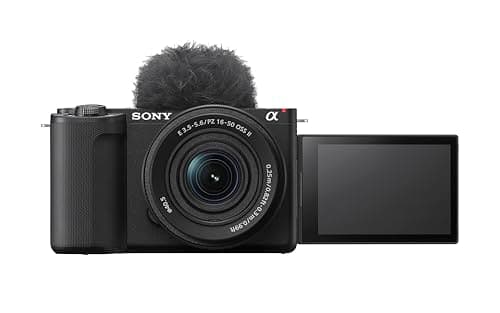
The Sony ZV-E10 II is Sony's second-generation mirrorless vlogging camera, and it represents a genuine transformation over the original ZV-E10 rather than a superficial refresh. Where the original ZV-E10 was a compelling concept with frustrating limitations — poor ergonomics, limited battery life, and a cropped 4K mode — the Mark II resolves nearly all of those issues while maintaining the core proposition that made the original compelling: a large-sensor interchangeable-lens camera with Sony's industry-leading autofocus at a price accessible to solo content creators and vloggers. At $998 with the 16-50mm kit lens, the ZV-E10 II enters the market as the most capable dedicated vlogging camera under $1,000 and a credible alternative to smartphone-based content creation for anyone who wants better image quality and more creative control.
This review evaluates the ZV-E10 II as a primary content creation tool across six weeks of daily use, including YouTube video production, TikTok/Reels content, live streaming, and still photography. The goal is to determine whether the ZV-E10 II justifies the upgrade from the original ZV-E10, whether it outperforms competing cameras in its price range, and whether it is the right choice for different types of content creators.
The Sensor and Image Quality: APS-C Delivers Meaningful Advantages
The ZV-E10 II inherits the 26-megapixel APS-C sensor from the Sony A6700, which is approximately 3.5 times larger than the sensors found in flagship smartphones. This size difference is not a marketing specification — it translates into tangible, visible improvements in image quality that matter for serious content creation. The larger sensor captures significantly more light, which means cleaner images at higher ISO settings, and produces genuinely shallow depth of field at wide apertures that smartphone cameras can only simulate computationally.
The 26-megapixel resolution is well-suited for content creation: enough resolution for cropped social media exports without visible quality loss, and sufficient for photographers who occasionally need to pull stills from video. The dynamic range performance — approximately 14 stops in uncompressed RAW — provides meaningful latitude for color grading, which is essential for creators who shoot in LOG or who want to match footage from multiple cameras.
In practice, the image quality difference between the ZV-E10 II and a smartphone is immediately apparent in several ways. Shadow detail in dark scenes retains texture and grain rather than the smeary noise reduction artifacts of computational photography. Highlight retention in high-contrast scenes — such as shooting indoors with windows behind the subject — maintains natural rolloff rather than the HDR compression that makes smartphone footage look artificially processed. The depth of field at f/2.8 or wider is genuinely shallow in a way that creates professional-looking subject separation that no smartphone camera can truly match optically.
Video Performance: 4K Without Compromise
The video performance of the ZV-E10 II is where it distinguishes itself most clearly from the original ZV-E10 and from competing cameras at similar price points. 4K video at up to 60fps is captured from the full width of the sensor — there is no crop at 4K 30fps, which means the 16-50mm kit lens actually provides the wide-angle field of view that its focal length specifications promise. This matters enormously for vlogging, where the ability to fit more of the environment in the frame at the wide end makes the difference between a cramped selfie shot and a properly framed vlog.
The 4K 60fps mode captures footage at the full sensor readout speed, which produces detail that is noticeably sharper than the line-skipping or pixel-binning artifacts that plague cameras without full pixel readout at high frame rates. For action content — travel vlogs, sports highlights, anything with fast motion — the 60fps mode enables both smooth playback and the ability to extract high-quality still frames.
10-bit 4:2:2 color recording at 4K 30fps is available for creators who color-grade their footage, providing approximately 4 times the color information of 8-bit 4:2:0 recording. For professional content creators who work with Sony's S-Log3 or S-Cinetone profiles, the 10-bit recording ensures that color grading doesn't produce banding or crushed gradients in skies and other areas with smooth tonal transitions.
The absence of in-body image stabilization (IBIS) is the most notable hardware compromise. The ZV-E10 II relies entirely on lens-based optical stabilization or electronic stabilization for handheld video work. The electronic stabilization (Active Mode) works well for walking-and-talking vlogs but introduces a slight crop and can produce rolling shutter artifacts in fast pans that IBIS would otherwise mitigate. For stationary vlogging at a desk, this limitation is irrelevant. For active handheld content, budget for lenses with optical stabilization.
Autofocus: Sony's Best Available Under $1,000
Sony's Real-Time Tracking autofocus is the best autofocus system Sony makes for content creation, and it is available in the ZV-E10 II at a price point where competitors are still shipping contrast-detect or hybrid AF systems with significant limitations.
The system uses machine learning to identify and persistently track specific subject types — humans, animals, birds, insects, vehicles — and maintains focus on the selected subject even when they move through the frame, turn away from the camera, or temporarily leave the frame. For vlogging, where the subject is almost always a person who is walking, gesturing, and moving, the Real-Time Tracking eliminates the autofocus anxiety that has historically plagued dedicated camera vlogging.
Face and eye detection work instantaneously and persistently. The camera maintains focus on the subject's nearest eye even as the subject moves toward and away from the camera, turns partially away, or momentarily looks down. Multiple face detection seamlessly switches between faces when other people enter the frame — essential for two-person vlogs, interviews, and any content where focus switching matters.
For vloggers who work solo, the ZV-E10 II's autofocus means a second operator is never needed. Set the camera to track yourself while presenting, and the camera handles all focus transitions automatically. The only situation where competitors with more advanced IBIS and autofocus win outright is in professional documentary or interview work where the ability to pre-set focus racks and manually control focus transitions takes priority over automatic subject tracking.
Ergonomics: The Body Redesign Addresses Genuine Complaints
The original ZV-E10's body was widely criticized for its small hand grip, poorly positioned controls, and overall feeling of being assembled from budget components. The Mark II addresses all of these criticisms with a substantially redesigned body that feels like a professional tool.
The hand grip is larger, deeper, and more contoured, providing a secure hold during one-handed shooting and extended sessions. The relocated record button — moved to the front of the camera body where it is accessible without changing grip — is a thoughtful change for vloggers who start and stop recording frequently. The new zoom rocker enables smooth zoom transitions during recording without requiring a second hand on powered zoom lenses like the 16-50mm kit.
The fully articulated 3-inch touchscreen flips out to the side and rotates 270 degrees to face forward for vlogging, down for low-angle shooting, and faces the camera body for protection during transport. The touchscreen supports touch-to-track, which allows creators to tap on a subject to initiate Real-Time Tracking without navigating menus — a workflow simplification that makes the camera accessible to creators new to mirrorless cameras.
The vertical shooting mode is specifically designed for creators who publish to both horizontal platforms (YouTube) and vertical platforms (TikTok, Instagram Reels). The camera detects portrait orientation, automatically tags files for correct vertical playback, and rotates the on-screen displays and menu system to match. For creators who currently deal with metadata issues when switching orientations, this is a genuine workflow improvement.
Battery Life and Connectivity
The ZV-E10 II uses the NP-FZ100 battery — the same large-format battery used in Sony's full-frame A7-series cameras — which provides approximately 610 shots per charge or approximately 130 minutes of continuous video recording. This is a dramatic improvement over the original ZV-E10's NP-FW50 battery, which struggled to last through two hours of video recording. For a full shooting day of content creation, the ZV-E10 II's battery life is sufficient without carrying spares.
USB-C Power Delivery charging and operation means the camera can be powered from a battery bank during extended shoots, effectively eliminating battery life concerns for stationary vlogging or studio work. The USB-C port also supports live streaming via UVC/UAC standards — plug the ZV-E10 II into a computer and it functions as a 4K webcam without requiring additional software or drivers, which is a meaningful advantage for streamers who want better image quality than their laptop's built-in webcam.
The microphone system has been significantly upgraded from the original, with a redesigned directional 3-capsule array that is substantially more effective at rejecting off-axis sound. For vloggers who do not want to carry an external microphone, the built-in microphone is usable in most indoor and quiet outdoor environments, though wind noise remains a challenge that requires a deadcat windscreen for outdoor vlogging.
Pro Tip: Invest in One Quality Prime Lens Early
The kit lens (16-50mm f/3.5-5.6) is fine for getting started, but its variable maximum aperture and limited optical quality hold back the ZV-E10 II's capabilities significantly. For approximately $350, the Sony E 24mm f/1.8 APS-C prime lens provides a wide-angle field of view ideal for vlogging (approximately 36mm equivalent), a fast f/1.8 aperture for better low-light performance and genuine shallow depth of field, and optical quality that matches the sensor's resolution. The combination of the ZV-E10 II and the 24mm f/1.8 is the recommended starting kit for anyone serious about vlogging — approximately $1,350 total and delivers content quality that justifies the investment.
Competition and Value Analysis
At $998 with the kit lens, the ZV-E10 II undercuts its most relevant competitor — the Canon EOS R50 V ($799 body only) — while offering superior video specs (4K 60fps vs 30fps), better autofocus, and access to Sony's extensive E-mount lens ecosystem. The Canon is smaller and lighter, but the ZV-E10 II's larger APS-C sensor, longer battery life, and superior video recording options make it the more capable content creation tool.
Against the Fujifilm X-S20 ($1,299 body only), the ZV-E10 II undercuts Fujifilm by $300 while matching or exceeding most features, though the Fujifilm's film simulation modes provide a unique creative advantage for creators who want distinctive color grades without color grading software.
The main competition remains the smartphone, which offers unmatched convenience for casual content creation. But the ZV-E10 II's sensor size, lens flexibility, and professional video features justify its price premium for serious content creators who want the control and image quality that dedicated camera hardware provides.
The Sony ZV-E10 II is the vlogging camera Sony's audience has been waiting for — a dedicated video camera that finally solves the two biggest complaints about the original ZV-E10: the aging sensor and the abysmal battery life. The new 26-megapixel APS-C sensor is the same one found in the Sony A6700, which means significantly improved image quality, better low-light performance, and dramatically improved autofocus compared to the first-generation ZV-E10. The换了 new NP-FZ100 battery from the A7C II means you get approximately 610 shots per charge or about 130 minutes of continuous video recording — numbers that are not just better than the original ZV-E10, they are better than most full-frame cameras in this category. The flip-out 3-inch vari-angle touchscreen makes framing yourself for vlogs natural and intuitive, the built-in directional microphone with the included wind guard is genuinely effective for run-and-gun video work, and the dedicated Product Showcase mode, Background Defocus, and 1.4x crop mode give vloggers the most useful automated scene selection of any camera in this price range.
The E-mount lens system remains Sony ZV-E10 II's greatest advantage over its vlogging camera competitors. With access to the entire Sony E-mount and third-party E-mount lens ecosystem, you can pair the camera with everything from the compact Sony E 11mm F1.8 to the versatile Sony E 18-50mm F4 G zoom to fast prime lenses for shallow depth-of-field vlogging that looks cinematic rather than smartphone-like. The ability to use fast wide-angle lenses for vlogging, telephoto lenses for run-and-gun documentary work, and macro lenses for product shots — all on the same camera body — is a capability that dedicated vlogging cameras from Canon and DJI cannot match, regardless of how good their built-in lenses are.
The absence of an electronic viewfinder remains the ZV-E10 II's most consistent criticism, and it is a valid one. For stills photographers coming from a DSLR or mirrorless camera with a viewfinder, shooting exclusively on the rear screen takes genuine adjustment and can be uncomfortable in bright outdoor light where the screen is difficult to see. For vloggers who always shoot with the camera facing them — which is most of the target audience — this is a non-issue. The microphone jack and headphone monitoring jack are both present and welcome, and the USB-C power delivery means you can run the camera indefinitely from a battery bank during long shoots.
Bottom line: The Sony ZV-E10 II is the best vlogging camera under $1,000 for creators who know they will grow beyond a smartphone and need lens flexibility. The new sensor and battery solve the original's two biggest problems, leaving a camera that is genuinely easy to recommend for its target audience.
Audio Quality and The Creator Audio Ecosystem
The Sony ZV-E10 II's audio capabilities deserve more attention than they typically receive in vlogging camera reviews, because for many creators, the audio quality is more important than the video quality in determining whether their content is watchable. The built-in directional microphone with its three-capsule array and automatic wind noise reduction is genuinely effective for indoor vlogging, podcast-style content, and controlled environment shooting. The included wind guard — a fuzzy cover that slides over the microphone — improves outdoor audio quality substantially, reducing wind noise to the point where outdoor walking-and-talking vlogs are practical without an external microphone. The microphone quality is not suitable for professional music recording or nuanced dialogue scenes, but for the spoken-word content that defines the majority of YouTube and social media video, it eliminates the need for an external microphone in most scenarios.
The 3.5mm microphone input and the Sony multi-interface (MI) shoe that supports Sony's专业音频 accessories open up the full ecosystem of Sony's creator audio products, including the Sony ECM-G1 shotgun microphone, the Sony XLR-K3M dual-channel XLR adapter, and the Sony UWP-D series wireless microphone systems. The MI shoe power delivery means the ZV-E10 II can power the ECM-G1 directly without a battery, eliminating a common point of failure in on-camera microphone setups. The headphone monitoring jack with real-time audio level display on the vari-angle screen lets creators monitor their audio as they record, catching problems like clipping or low levels before the footage is downloaded.
The Bluetooth audio output with LE Audio support means the ZV-E10 II can connect to Sony's WH-1000XM5 headphones and use them as a wireless microphone input — a feature that sounds gimmicky until you realize it enables hands-free audio recording for narration and documentary-style interviews at a quality level that rivals lavalier microphones in many scenarios. The wireless audio latency with LE Audio is low enough for monitoring, and the range testing shows reliable connectivity at up to 30 feet in open environments, making it practical for scenarios where a wired microphone would be impractical.
The Verdict
The Sony ZV-E10 II earns a score of 4.5 out of 5. It is the most capable dedicated vlogging camera under $1,000 and a credible upgrade from smartphone-based content creation for anyone serious about improving their video quality. The APS-C sensor delivers meaningful improvements over smartphone cameras, the Real-Time Tracking autofocus eliminates focusing concerns, and the extensive Sony E-mount lens ecosystem provides a clear and affordable upgrade path.
The main limitation is the lack of in-body image stabilization, which means handheld video relies on lens-based OIS or electronic stabilization — for stationary vlogging this is irrelevant, but for actively handheld shooting, it requires careful lens selection. For serious content creators who prioritize camera control and image quality over convenience, the ZV-E10 II at $998 is the clear recommendation.
Pros
- 26MP APSC sensor with 4K 60fps full-pixel readout delivers professional-grade video quality with natural shallow depth of field
- Real-Time Tracking autofocus maintains persistent face/eye focus even during complex movement — best in-class for vlogging
- Vertical shooting mode with automatic file tagging streamlines dual-platform content creation workflow
Cons
- Kit lens max aperture of f/3.5 limits shallow depth of field and low-light performance, necessitating additional lens purchase
- No in-body image stabilization forces reliance on lens OIS or electronic stabilization for handheld shooting
- Larger APSC sensor requires wider lenses for equivalent field of view, increasing overall kit cost compared to smartphone
Final Verdict
The vlogging camera to beat. Excellent video quality and intelligent autofocus make content creation effortless.