Amazfit Bip 6 Review: The Budget Smartwatch That Punches Above Its Weight
The Amazfit Bip 6 proves you don't need to spend hundreds for a capable fitness smartwatch, delivering an AMOLED display, built-in GPS with offline maps, 140+ workout modes, and two-week battery life for just $79.
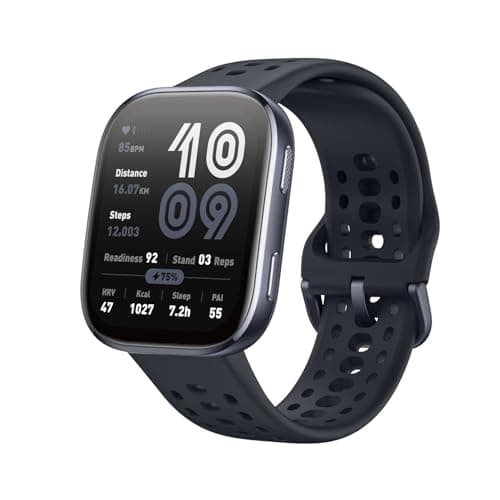
The smartwatch market is a tale of two extremes. At one end, you have the $350+ flagships from Apple, Samsung, and Garmin that pack every sensor imaginable but demand a serious financial commitment. At the other, you find dozens of generic wearables that technically track steps and show notifications but feel more toy than tool. The Amazfit Bip 6 sits in a sweet spot that barely seems possible—a $79 smartwatch that delivers an AMOLED display, built-in GPS with offline maps, 140-plus workout modes, and up to fourteen days of battery life. After spending two weeks with it strapped to my wrist, I can confirm what the reviews are saying: this is genuinely one of the best budget smartwatches money can buy in 2026, and it challenges assumptions about what you have to spend to get a capable fitness companion.
Design and Build Quality
The first thing you notice pulling the Amazfit Bip 6 out of its box is how mature it looks. The packaging itself is minimalist and eco-friendly, containing just the watch body, the silicone strap, the magnetic charging dock with USB-C cable, and a quick-start guide. No bulky manuals or unnecessary inserts—Amazfit keeps it simple, and that is appreciated for a device at this price point.
Previous Bip models leaned heavily into the "budget" aesthetic with plastic bodies and basic TFT screens, but the Bip 6 sheds that reputation entirely. The case uses a fiber-reinforced polymer with an aluminum alloy frame that gives it a reassuring heft without feeling heavy—at just 27.9 grams without the strap, it's light enough that you'll forget you're wearing it after a few minutes. The 46.3 by 40.2 millimeter footprint and 10.45 millimeter thickness make it compact enough for smaller wrists while still providing a generous screen area.
The 22-millimeter silicone strap deserves special mention. It's a noticeable upgrade over the TPU strap on the Bip 5, with a softer, more pliable feel that doesn't trap sweat against your skin during workouts. Sixteen adjustment holes mean you'll find a perfect fit regardless of wrist size, and the quick-release mechanism makes swapping straps trivial. The watch comes in five color options—Black, Charcoal, Stone, Red, and Blush—with three body finishes to choose from, so there's plenty of room for personalization.
The 1.97-inch AMOLED display is the star of the show here, and it is the single biggest upgrade from the Bip 5's TFT panel. Colors are vibrant and rich, blacks are truly black, and at 2,000 nits peak brightness, outdoor visibility is outstanding. I could read the screen clearly under direct Southern California sun, something I cannot say for many smartwatches that cost three times as much. The always-on display mode is available, though it does take a significant toll on battery life, reducing it from roughly two weeks to under a week. The bezels are reasonably slim for this price point, giving the watch a modern look that doesn't scream "budget device."
Two physical buttons sit on the right edge: a crown-style button for navigation and a customizable shortcut button that defaults to launching workouts. The crown has a satisfying click and makes scrolling through menus easy, though I do wish it were a rotating crown rather than a simple button press. The shortcut button can be mapped to your most-used function—I set mine to the Zepp Flow AI assistant—and it's genuinely useful for reducing screen taps during runs.
Display Quality and Performance
Talking about the display again is warranted because it fundamentally changes how you interact with this watch. The 1.97-inch AMOLED panel runs at a resolution that makes text crisp and watch faces look sharp. Amazfit offers a huge library of watch faces through the Zepp app, ranging from analog classics to data-dense digital designs that show heart rate, steps, calories, and weather at a glance. Some of the more intricate faces are paid, but the free selection is generous enough that you won't feel shortchanged.
Touch response is excellent. Swiping between tiles is smooth, and the display registers taps accurately even when your fingers are sweaty from a workout. The auto-brightness sensor works well, adjusting smoothly as you move between indoor and outdoor environments. I did notice occasional ghost touches when the display got wet during rain, but this is a common issue across virtually all touchscreen smartwatches and isn't unique to the Bip 6.
The 2,000-nit peak brightness deserves repeating because it's genuinely transformative for a watch in this price bracket. To put that in perspective, the Apple Watch Series 11 hits 3,000 nits peak, but it costs roughly four times as much. The Amazfit Bip 6's AMOLED panel gets bright enough for hiking in full midday sun, dims low enough for a dark bedroom, and looks excellent at every level in between.
Fitness Tracking and Workout Modes
This is where the Amazfit Bip 6 really flexes. With 140-plus workout modes covering everything from running and cycling to HIIT, swimming, yoga, and even niche activities like HYROX racing, there is very little this watch cannot track. Each mode captures relevant metrics—pace, distance, heart rate zones, cadence, stride length—and presents them in a clear, actionable format during and after your workout.
The breadth of workout options means you will rarely find yourself in a situation where your activity is not supported. Whether you are into pilates, paddleboarding, functional strength training, or even esports, there is a dedicated mode for it. The watch automatically detects certain activities like walking and treadmill running and prompts you to start tracking, which is convenient for casual movement throughout the day. You can also customize the workout list to prioritize your most-used modes, keeping the menu clean and quick to navigate during exercise.
I tested the Bip 6 against my usual routine of road running, indoor cycling, and bodyweight strength training, and it performed admirably across all three. The built-in GPS locks onto satellites reasonably quickly—typically within fifteen to twenty seconds in open sky—though it does struggle a bit in dense urban canyons or tree-covered trails. Once locked, the tracking is generally accurate, keeping me on the correct path during runs along the beach boardwalk. The Wareable review noted that GPS accuracy is the Bip 6's weakest link, with some underreporting of distance and occasional veering off course. I saw similar behavior on one run through a park with heavy tree cover, where the watch recorded 3.1 miles against my reference device's 3.3 miles. For most recreational runners, this level of accuracy is perfectly acceptable. If you're a competitive racer who needs precise split times, you'll want to step up to a Garmin Forerunner or similar dedicated running watch.
Heart rate tracking during steady-state exercise is solid. The Bip 6 uses Amazfit's BioTracker PPG biometric sensor with five photodiodes and two LEDs, and it generally stays within two to three beats per minute of a chest strap for steady-effort runs. The gap widens during high-intensity interval training, where the optical sensor's inherent latency becomes more noticeable. For HIIT sessions, pairing an external Bluetooth chest strap would give you more accurate data, and the Bip 6 supports external sensor pairing—a welcome feature at this price. The ability to connect external heart rate monitors, foot pods, and even cycling cadence sensors means the Bip 6 can grow with you as your fitness journey advances, rather than forcing you to upgrade the entire watch when you outgrow its built-in sensors.
The offline maps feature is genuinely remarkable for a $79 watch. You can download specific map regions through the Zepp app and navigate them directly on your wrist with turn-by-turn guidance. The storage is limited, so you cannot load an entire continent, but downloading your local city or a hiking area is easy. The map interface is a bit sluggish—panning and zooming have noticeable lag—but it works well enough for occasional reference during outdoor adventures. This is a feature you simply do not find on watches under $100, and it alone justifies the Bip 6's recommendation for hikers and trail runners.
Sleep Tracking and Health Monitoring
The Amazfit Bip 6 takes health monitoring seriously, offering 24/7 heart rate tracking, blood oxygen saturation monitoring, stress assessment, and a readiness score called Zepp Readiness. Sleep tracking is comprehensive, breaking your night into REM, light sleep, deep sleep, and awake periods, and presenting the data through clear graphs in the Zepp app.
I wore the Bip 6 alongside an Oura Ring 4 for several nights to compare sleep tracking accuracy, and the results were encouraging. Both devices agreed on total sleep time within a fifteen-minute margin on most nights, and the stage breakdowns were broadly similar. The Bip 6 occasionally took longer to register that I had fallen asleep—it sometimes showed me as still awake for twenty to thirty minutes after the Oura Ring had marked me as asleep—but the overall patterns were consistent enough to trust for trend analysis.
Readiness score is a useful metric that combines your heart rate variability, resting heart rate, sleep quality, and activity history into a single 0-100 number. It is similar to Garmin's Body Battery or Whoop's Recovery score, and I found it generally aligned with how I felt each morning. Days when I scored above 80 genuinely felt more energetic, and the watch's suggestion to take a recovery day on a 62-score morning was well-timed after a particularly intense training block. The readiness data updates each morning automatically and appears as the first card when you first wake up, making it easy to gauge whether you should push hard or take it easy.
The catch is that the most advanced sleep and stress analysis features require a Zepp Aura subscription at $69 per year. Without the subscription, you still get solid sleep stage tracking, nightly sleep scores, and weekly/monthly trends—which is genuinely useful—but the personalized insights, AI-powered sleep improvement recommendations, and guided breathing exercises are locked behind the paywall. This is a common pattern in the wearable industry now—Oura charges $5.99 per month, Fitbit Premium is $9.99 per month—and $69 per year is actually competitive. Still, it's worth knowing about before you buy.
Battery Life
Amazfit promises up to fourteen days of battery life under typical usage, and in my testing, that claim holds up surprisingly well. With the always-on display disabled, heart rate monitoring set to every minute, and two to three GPS-tracked workouts per week, I hit twelve days before the watch dropped to 10 percent and I threw it on the charger. That's outstanding for a watch with an AMOLED display and continuous health monitoring.
The always-on display mode reduces battery life significantly. With AoD enabled, I got about six days of use, which is still competitive with most premium smartwatches but falls short of the Bip 6's headline two-week claim. GPS-only battery life is rated at roughly thirty-two hours, which should cover even the most ambitious ultramarathon or multi-day hiking trip.
Charging is handled through a proprietary magnetic dock that connects to the back of the watch. A full charge from empty takes about two hours, which is reasonable. The dock uses USB-C on the other end, so you can use your phone charger or laptop without carrying an extra cable. Notably, the Bip 6 charger is not compatible with the Bip 5 charger, so if you're upgrading, you'll need to keep the new cable handy.
Smart Features and Software
The Amazfit Bip 6 runs on Zepp OS, Amazfit's homegrown operating system, and connects to your phone through the Zepp app on Android or iOS. The app has come a long way from earlier versions, though it remains a bit cluttered with tabs and options. The main dashboard shows your daily activity, sleep data, heart rate trends, and readiness score, each in its own card that you can expand for more detail.
Notification handling is functional but basic. You can see incoming texts, calls, and app alerts on your wrist, and on Android you can send preset quick replies. On iOS, notifications are read-only—you can see them but cannot respond. This is a limitation imposed by Apple rather than Amazfit, and it affects all third-party smartwatches on iOS. There is no support for replying with voice dictation or typing on the watch, which is a feature you would get with a Wear OS or Apple Watch.
Music control is similarly limited. You can control playback on your phone—play, pause, skip, volume—but you cannot browse Spotify, select playlists, or stream music directly from the watch. You can transfer music files to the watch's internal storage and pair Bluetooth headphones for phone-free listening, but the process is manual and the storage space is limited. If you are someone who likes to run without a phone, the offline music transfer functionality works, but it requires planning ahead and loading your playlists through a computer rather than streaming them directly.
Zepp Flow, Amazfit's AI voice assistant, is activated by holding the top button or saying "Zepp Flow." It can handle basic tasks like setting timers, checking the weather, and launching workouts. I asked it to suggest a healthy dinner and got a request to open the "what to eat" app, which then failed to open. I asked about an upcoming sporting event and it offered to start a workout related to that sport. The assistant clearly needs more development to be genuinely useful, and at this point it feels more like a beta feature than a polished product. Amazfit has been pushing AI features across its lineup, and the concept of a voice-first smartwatch interface is appealing, but the execution on the Bip 6 falls short of what you would expect from a mature product.
Missing features worth noting include NFC contactless payments, an onboard music player for streaming services, and third-party app support. You cannot load Strava or Spotify onto the watch itself. For a $79 device, these omissions are understandable, but they are worth knowing if you are coming from a Wear OS or Apple Watch ecosystem.
Comparison to Competitors
At $79, the Amazfit Bip 6's closest competitor is the CMF Watch Pro 2 by Nothing, which sells for around $69 and offers a similar AMOLED display and Bluetooth calling. The CMF Watch Pro 2 has a cleaner software experience and slightly better build quality, but it lacks the Bip 6's offline maps and has fewer workout modes. If offline navigation is important to you, the Bip 6 wins hands down.
The Amazfit Active 2 costs around $99 and sits in the same family, offering a slightly more premium build with a stainless steel bezel and rotating crown. It also uses the same BioTracker sensor and Zepp OS software, so the tracking experience is nearly identical. The Active 2's rotating crown is genuinely nicer to use than the Bip 6's buttons, but the Bip 6's offline maps give it an edge for outdoor enthusiasts.
Against the $329 Apple Watch Series 11, the Bip 6 obviously cannot compete on smart features, app ecosystem, or health sensor accuracy. But that comparison is almost unfair given the price difference. The Bip 6 is not trying to be an Apple Watch killer—it is trying to be a capable fitness watch for people who do not want to spend $300-plus, and in that mission it succeeds admirably.
Samsung's Galaxy Watch 8 starts at $299 and offers Wear OS, Google Assistant, Samsung Pay, and a much richer app ecosystem. It also has more accurate GPS and heart rate tracking. But you could buy four Amazfit Bip 6 watches for the price of one Galaxy Watch 8, and the Bip 6 still delivers excellent battery life and solid fitness tracking.
Who Should Buy the Amazfit Bip 6
The Amazfit Bip 6 is an easy recommendation for anyone who wants a capable fitness tracker without spending a lot of money. If you run, hike, cycle, swim, or hit the gym regularly, the Bip 6 will track your workouts with enough detail to monitor your progress and identify trends over weeks and months. The offline maps are a genuine differentiator at this price, and the two-week battery life means you are not constantly hunting for a charger.
It is less suitable for people who need advanced smartwatch features. If you want to reply to messages from your wrist, make NFC payments at the checkout, stream Spotify without your phone, or load third-party apps, you should look at a Wear OS watch or an Apple Watch. Similarly, if you are a serious competitive athlete who needs sub-meter GPS accuracy and external sensor support for power meters, the Garmin ecosystem is a better fit despite the higher cost.
The subscription for advanced sleep analysis is a mild frustration, but it is optional rather than mandatory. The free sleep tracking provides plenty of useful data, and the Zepp Aura subscription is competitively priced compared to Oura and Fitbit Premium.
For everyone else—the fitness-minded person on a budget, the runner who wants offline maps without spending Garmin money, the parent who needs a health tracker that lasts through a busy week—the Amazfit Bip 6 is one of the best smartwatch values available in 2026. It proves that you do not need to spend hundreds of dollars to get a genuinely good wearable experience.
The question of value is at the core of what makes the Amazfit Bip 6 special. When a smartwatch costs less than a good pair of running shoes, the expectations are naturally lower. Amazfit exceeds those expectations with a polished design, a gorgeous AMOLED display, comprehensive health tracking, and an offline mapping feature that genuinely does not exist on any other watch in this price range. The compromises—no NFC payments, limited smart features, occasionally imprecise GPS—are real, but they are compromises that most people in the target audience will happily accept for the savings. If you want a fitness companion rather than a mini smartphone on your wrist, the Amazfit Bip 6 is one of the most compelling options you can buy right now.
Related: If you're exploring smartwatch and wearable options, check out our in-depth reviews of the Google Pixel Watch 4, the OnePlus Watch 3, and the Oura Ring 4 for more health and fitness tracking alternatives.
Pros
- Excellent value at $79 with premium AMOLED display
- Built-in GPS with free offline maps
- Up to 14 days of battery life
- Aluminum frame and lightweight construction
- Comprehensive health tracking with readiness score
Cons
- GPS accuracy can be inconsistent in challenging conditions
- No NFC payments or music streaming control
- Advanced sleep analysis requires Zepp Aura subscription ($69/yr)
Final Verdict
The Amazfit Bip 6 proves you don't need to spend hundreds for a capable fitness smartwatch, delivering an AMOLED display, built-in GPS with offline maps, 140+ workout modes, and two-week battery life for just $79.