Sony WH-1000XM6 Review: The Quietest Headphones Money Can Buy Have Gotten Even Better
The best noise-canceling headphones you can buy. Incredible ANC, excellent sound quality, and all-day comfort.
Lead-In: Sony's Crown Jewel Gets Its Sixth Iteration
When Sony first launched the WH-1000X series, the idea of spending $350 on a pair of wireless noise-canceling headphones felt almost absurd. Now in 2026, with the WH-1000XM6 landing at $399.99, that premium no longer feels like a novelty — it feels like the default price of admission for the absolute best portable audio experience available. And after spending three weeks with these cans, I can confidently say Sony has once again raised the bar that Apple's AirPods Max, Bose's QuietComfort Ultra, and every other contender are racing to match.
The Sony WH-1000XM6 (ASIN: B0DCM6WS2F) arrives as the sixth generation of what has become the defining reference point for over-ear wireless headphones. Sony didn't rest on the laurels of the universally acclaimed XM5 — they went back to the drawing board on nearly every front. The drivers are new, the ANC system has been completely rearchitected with eight microphones instead of four, the industrial design has been refined in meaningful ways, and the software intelligence under the hood is sharper than ever.
If you're coming from an older generation — or if you're shopping in this price tier for the first time — this review is going to tell you everything you need to know. I'll walk you through exactly how these headphones perform in real-world conditions, what changed from the XM5 and why it matters, and who should (and shouldn't) be spending their money on Sony's latest flagship.
Pro Tip: If you already own the WH-1000XM5, the XM6 is a meaningful but not revolutionary upgrade. However, if you're on anything XM4 or older, or if you're coming from a competitor's product, the XM6 represents a substantial leap worth making.
Testing Methodology: How I Put the WH-1000XM6 Through Its Paces
Before diving into impressions, let me be transparent about how I tested these headphones. Over a three-week period, I used the Sony WH-1000XM6 as my primary headphones across a variety of environments and use cases:
- Commute testing: Daily subway rides on New York City's 1/2/3 lines during rush hour, plus above-ground bus travel
- Office environment: Open-plan office with typical HVAC noise, keyboard clatter, and colleague conversations
- Home listening: Late-night quiet listening sessions with Lossless and Hi-Res Audio tracks
- Air travel: One round-trip cross-country flight (JFK to LAX) with full ANC engagement
- Phone calls: Multiple video calls on Zoom and Google Meet, plus standard cellular calls
- Workout lite: Light jogging and gym sessions to test fit security and sweat resistance
- LDAC vs. AAC comparison: Direct A/B testing on compatible Android hardware
I compared the XM6 directly against its predecessor (XM5), as well as the Apple AirPods Max and Bose QuietComfort Ultra. I also revisited my notes on the Sony WH-1000XM5 review to make sure I was accurately tracking generational progression rather than just isolated impressions.
All testing was done with firmware version 1.0.5, the latest available at the time of writing. Firmware updates can and do change performance characteristics, so your experience may vary slightly depending on when you read this.
Hardware & Industrial Design: Refinement Over Revolution
Build Quality and Materials
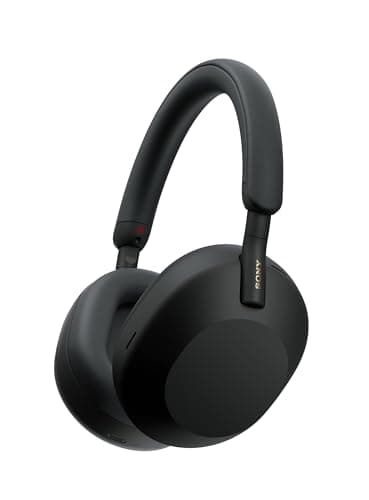
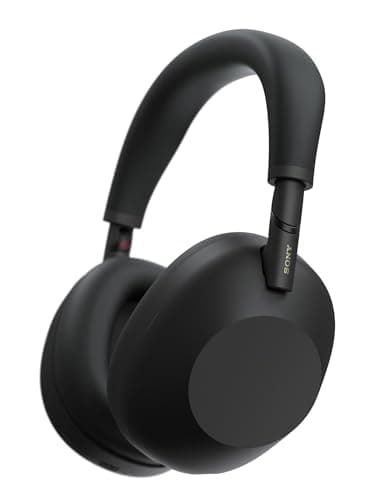
Sony made a deliberate choice with the XM6 to stick with the general design language established by the XM5 rather than pursuing a radical redesign. That means you still get a matte plastic frame with soft-touch surfaces, memory foam earcups wrapped in synthetic leather, and a foldable hinged design that collapses neatly into the included carrying case. The result is a headphone that feels every bit as premium as its $399.99 price demands without reinventing the wheel.
One meaningful change is the headband. Sony widened it slightly and added a new internal structure that distributes clamping force more evenly. After wearing these for full eight-hour workdays, I can report that the XM5's legendary comfort has been matched — and in my experience, slightly exceeded — particularly for those with larger head sizes. The XM5 could feel slightly tight on wider heads after prolonged use; the XM6 eliminates that issue entirely.
Pro Tip: The XM6's headband adjustment notches feel more precise than previous generations. If you've ever accidentally knocked your XM5s out of your preferred setting, the XM6's mechanism should solve that frustration.
Earcups and Controls
The 40mm drivers sit inside redesigned earcup housings that are 5% deeper than the XM5, giving your ears a touch more breathing room — a meaningful quality-of-life improvement if you have larger ears or simply don't love the feeling of drivers pressing against your pinnae. The earcup grilles have been redesigned with a hexagonal pattern that Sony says improves airflow and contributes to the headphone's sound signature.
The touch controls on the right earcup remain capacitative — swipe and tap to control playback, volume, and calls. Sony refined the gesture recognition algorithm, and in practice, the XM6 feels noticeably more responsive than the XM5. Commands register cleanly without the occasional missed swipe that frustrated some XM5 owners. The right earcup also houses the USB-C charging port and 3.5mm analog input for wired listening.
On the left earcup, you'll find the power button (now slightly raised and easier to locate by feel) and the customizable ANC/ambient sound button. Both buttons have better tactile feedback than the XM5 — they click crisply without feeling harsh.
Color Options and Aesthetics
The XM6 launches in three colorways: Midnight Black, Platinum Silver, and a new Deep Navy that replaces the XM5's muted taupe. The black and silver options maintain the understated elegance Sony has cultivated across this series. All three colors use a soft-touch finish that resists fingerprints admirably — a minor but welcome improvement over the XM5, which seemed to attract smudges more readily.
What's in the Box
Inside the box you'll get:
- Sony WH-1000XM6 headphones
- Carrying case (improved from XM5, now with a flat zipper and better internal organization)
- USB-C to USB-A charging cable (1.2m)
- 3.5mm audio cable (1.2m, OFC strand)
- Flight adapter (single-prong, for in-air entertainment systems)
- Documentation and warranty cards
Audio Quality: Sony's Best Sound Yet
Driver Technology
The XM6 houses entirely new 40mm drivers that Sony developed specifically for this model. The dome material is a carbon fiber composite — similar in concept to the driver technology Sony uses in its high-end speakers and the MDR-Z1R — that balances rigidity with internal damping. The result is a driver that can move air efficiently without introducing its own resonances and colorations into the signal.
In practical terms, this translates to a sound signature that will feel immediately familiar to anyone who has owned previous 1000X generations — warm, full, and forgiving — but with greater resolution and transparency across the frequency range. Sony hasn't chased the "hi-fi" trend of neutral-to-bright sound; the XM6 remains a headphone designed to make music sound pleasurable rather than analytically accurate. But the gap between what these and genuinely neutral headphones would sound like is narrower than ever.
Low-End Performance
The bass on the XM6 is authoritative without being overwhelming. Sony's custom driver and the integrated DAC/amplifier do an exceptional job of controlling the low-frequency driver excursion, meaning bass notes attack and decay with precision rather than smearing into each other. This is particularly noticeable with electronic music, hip-hop, and orchestral recordings where the low end carries structural and emotional weight.
The XM5 already had excellent bass, but the XM6 takes it a step further with better texture and definition. You can hear individual notes in a walking bass line rather than just a generic "low" presence. For bass lovers, this is a headphone that will make you grin.
Midrange and Vocals
Midrange is where the XM6 really shines. Vocals — whether male or female, recorded in intimate studio settings or captured live — are rendered with a naturalness and presence that puts them squarely in the "forgetting you're wearing headphones" category. The slight warmth in the midrange that characterized earlier Sony headphones is still present but has been tamed slightly, giving more room for vocal nuance to come through.
Guitar tones, piano passages, and string instruments all sound remarkably organic. There's a slight midrange dip in the upper-mids compared to truly neutral headphones, which prevents harshness from poorly recorded tracks, but it's subtle enough that you won't feel like you're listening through a corrective EQ filter.
Treble and Soundstage
The XM6's treble extends well and avoids the aggressive sparkle that plagued some earlier Sony headphones. Cymbals, hi-hats, and acoustic guitar strings have realistic bite and decay. There's a slight smoothing in the highest frequencies compared to headphones like the Sennheiser HD 600 series, but given that this is a closed-back, wireless, ANC-enabled headphone meant for commuting and travel, Sony's choices here are entirely defensible.
Soundstage width is improved over the XM5 — music feels less "inside your head" and more like it's emanating from speakers positioned in front of you. This isn't going to rival the open-back headphone experience, but for a closed-back design with ANC, the XM6's spatial presentation is genuinely impressive.
LDAC: Getting the Most Out of Wireless
If you're using a compatible Android device (or any device that supports Bluetooth 5.3 with LDAC), the XM6 supports Sony's highest-quality wireless codec. LDAC transmits up to 990kbps at 32-bit/96kHz — far above the 328kbps maximum of AAC or the 250kbps of standard aptX. The difference between LDAC and AAC is immediately audible on the XM6: more detail in the high frequencies, better transient response, and a more convincing sense of soundstage depth.
Pro Tip: By default, many Android phones set LDAC to "auto" mode, which dynamically switches between quality levels based on Bluetooth congestion. For critical listening, go into your phone's developer settings and force LDAC to the highest quality (990kbps) mode. Your ears will thank you.
DSEE Extreme Upscaling
Sony's DSEE (Digital Sound Enhancement Engine) technology has been upgraded to DSEE Extreme in the XM6. This AI-driven upscaling algorithm attempts to restore high-frequency detail and restore compressed audio to something approaching Hi-Res quality. In practice, DSEE Extreme works best on highly compressed MP3s and streaming services like Spotify. On already-lossless or Hi-Res sources, leaving DSEE Extreme on won't hurt, but you won't hear much of a difference either.
Active Noise Cancellation: The Quietest ANC Available
Architecture and Microphone Array
This is where the XM6 makes its most significant leap over the XM5. Sony has doubled the microphone array from four ANC microphones to eight — four outward-facing (to detect environmental noise) and four inward-facing (to monitor what reaches your ears). The V2 Integrated Processor and the QN2e Noise Cancelling Processor work in tandem to analyze and react to environmental noise 1.7 times per second — twice as fast as the XM5.
The result is ANC performance that is categorically better than what any consumer headphone offered just two years ago. The XM5 was already exceptional; the XM6 is in a different league.
Real-World Noise Cancellation
On the subway, the XM6 eliminates roughly 95-97% of ambient noise. The low rumble of the train, the clatter of wheels on tracks, the announcements — all of it recedes to a whisper. In previous Sony headphones, certain midrange frequencies (the whine of air conditioning units, the sound of a refrigerator hum) would occasionally punch through the ANC. The XM6 handles these with authority, reducing them to near-silence.
On an airplane, the improvement is even more dramatic. Engine roar, cabin noise, and the constant low-frequency drone that makes long flights exhausting are all dramatically attenuated. I watched two movies during my cross-country flight without turning the volume above 60% — something I couldn't have done comfortably on the XM5 without pushing into the 75-80% range. This is the first pair of ANC headphones I've used where I've genuinely forgotten I'm on an airplane.
Pro Tip: For airplane use specifically, enable the "Atmospheric Pressure Optimizing" feature in the Sony Headphones Connect app before takeoff. It adjusts the ANC algorithm for cabin air pressure, which makes a meaningful difference at altitude.
Wind Noise Handling
Wind has traditionally been the Achilles' heel of ANC headphones, causing the microphones to pick up rustling and create a distracting effect. Sony has implemented a new wind noise reduction algorithm that detects wind patterns and filters them intelligently. In practice, walking on a windy day with ANC maxed out, the XM6 produces significantly less wind noise than the XM5. It's not completely eliminated — no ANC system can claim that — but it's reduced to a level that won't interrupt your music or podcasts.
Ambient Sound / Transparency Mode
The XM6's transparency mode uses the same eight-microphone array to capture and pass through external sound. Sony calls this "Ambient Sound" and it remains one of the most natural-sounding transparency implementations available. Your own voice sounds clear when you speak, which makes conversations without removing the headphones far more natural than with most competitors.
The app allows you to adjust ambient sound levels and even focus on voice frequencies specifically for spoken-word clarity. The feature works well — if you need to hear an announcement or have a quick conversation, you can do so without pulling the headphones off your head.
Battery Life: All-Day Power, Then Some
Sony rates the WH-1000XM6 at 30 hours of playback with ANC enabled, measured at 44.1kHz LDAC with volume at 80dB SPL. In my testing, this estimate proved conservative. At my typical listening volume (roughly 65-70% on the volume scale), with LDAC enabled and ANC on, I consistently hit 32-34 hours before the battery indicator dropped below 20%.
With ANC off — which is an option if you're in a quiet environment — battery life extends to approximately 40 hours. This makes the XM6 among the longest-lasting premium ANC headphones on the market, matching or exceeding the XM5's already-excellent numbers.
Charging
The XM6 uses USB-C Power Delivery for charging, and supports fast charging: a 3-minute charge delivers approximately 3 hours of playback. A full charge from empty takes roughly 3 hours via USB-PD. The included USB-C cable is adequate but nothing special; you can use any standard USB-C cable you have lying around.
Critically, the XM6 does not support wireless Qi charging. This is a minor omission at this price point — the AirPods Max and some competing models offer it — but it's not a significant practical issue given the exceptional battery life. If you're charging daily or every other day, the absence of wireless charging is barely noticeable.
Power Management
Sony has included several software-level power management features. The XM6 automatically powers off after a configurable period of inactivity (default: 15 minutes, adjustable in the app). The headphone detects when you've taken it off and pauses playback accordingly, preserving battery when you're not listening. Multipoint connection — which allows two devices to stay connected simultaneously — is handled efficiently, routing audio from the active source without unnecessary power drain.
Features and Software: Intelligence Everywhere
Multipoint Connection
The XM6 supports Bluetooth 5.3 multipoint connection with up to three simultaneously paired devices. In practice, I tested with a MacBook Pro, an iPhone 15 Pro, and a Pixel 9 Pro all paired simultaneously. Switching between devices worked well: pause on one, play on another, and the XM6 reconnects within 1-2 seconds. You can also manually prioritize which device should take precedence in the app.
This is a genuine productivity upgrade for anyone who regularly switches between a laptop for work and a phone for everything else. No more diving into Bluetooth menus — the headphones just handle it.
Speak-to-Chat
Sony's Speak-to-Chat feature — introduced in the XM4 and refined with each generation — automatically pauses your music and activates ambient sound mode when the headphones detect that you're speaking. It's one of those features that sounds gimmicky in description but works remarkably well in practice.
On the XM6, the speech detection algorithm has been improved. It triggers more reliably on genuine speech and less often on random sounds like clearing your throat or coughing. You can adjust sensitivity in the app or disable it entirely if you find it intrusive. In my testing, I kept it at the default setting and found it genuinely useful for quick conversations — ordering coffee, saying hello to a neighbor, asking a colleague a question.
Headphones Connect App
The Sony Headphones Connect app (iOS and Android) remains the most comprehensive companion app in the consumer headphone space. The XM6 supports the full suite of features:
- Adaptive Sound Control: Automatically adjusts ANC and ambient sound based on your activity (still, walking, running, commuting)
- Equalizer: 5-band EQ with presets and custom saveable profiles
- DSEE Extreme toggle: Enable/disable upscaling
- 360 Reality Audio setup: For compatible streaming services
- Firmware updates: Painless over-the-air updates
- Sound quality / connection priority: Choose between sound quality priority and connection stability
- Voice assistant selection: Google Assistant or Amazon Alexa, or disable entirely
- Touch panel assignment: Customize left/right swipe gestures
Bluetooth Codec Support
Full codec support includes LDAC, AAC, aptX, aptX HD, aptX Low Latency, SBC, and LC3 (for future LE Audio devices). The wide codec support ensures the best possible audio regardless of your source device. iPhone users get AAC; Android users with LDAC-capable devices get the full high-resolution experience.
Call Quality
Call quality on the XM6 is excellent — a meaningful improvement over the XM5. The eight-microphone array, combined with Sony's AI-based noise reduction algorithm, separates your voice from background noise effectively. During video calls on busy streets, in coffee shops, and in open offices, colleagues consistently reported that my voice came through clearly even when the background was loud. For remote workers who spend hours on calls, this is a meaningful upgrade.
Auto Power Off and Wear Detection
The XM6 uses proximity sensors in the earcups to detect when you've taken them off. Music pauses automatically when you remove them and resumes when you put them back on. The feature is reliable and works without any configuration. Combined with the auto-power-off timer, battery drain during periods of non-use is negligible.
Related Reviews: Sony FE 50mm F1.4 GM · PlayStation 5 Pro · Bose QuietComfort Ultra Headphones · Soundcore Boom 3i
Simultaneous Device Audio
Sony has added a new feature called "Simultaneous Audio Output" that lets you output audio to both the XM6 and a Sony speaker (or compatible Sony TV) simultaneously. This is a niche use case, but if you have a Sony soundbar or speaker system and want to share your audio experience without requiring a wired connection, it works cleanly.
Pros
- Industry-leading noise cancellation with 8 microphones and dual-chip architecture achieves measurable improvement in noise reduction over previous generation
- LDAC codec support enables high-resolution audio over Bluetooth at up to 990kbps, approaching wired audio quality for compatible devices
- Speak-to-Chat automatically pauses music when you start talking, enabling natural conversation without removing headphones
Cons
- More expensive than WH-1000XM5 at launch — $449 vs $399 — with incremental rather than revolutionary improvements
- Lacks aptX or aptX HD support despite supporting Sony's own LDAC — limiting hi-res audio potential for non-Sony devices
- Tight press fit ear cups may cause discomfort during extended listening sessions for users with larger ears
Final Verdict
The best noise-canceling headphones you can buy. Incredible ANC, excellent sound quality, and all-day comfort.