Samsung Galaxy Z Fold 7 Review: The First Foldable That Finally Feels Like a Phone
The Samsung Galaxy Z Fold 7 is thinner than the S25 Ultra, lighter than the iPhone 16 Pro Max, and finally delivers a folding phone that doesn't feel like a compromise. With a 200MP camera, 8-inch display, and Snapdragon 8 Elite power, this is the foldable to buy in 2026.
Samsung Galaxy Z Fold 7 Review: The First Foldable That Finally Feels Like a Phone
Samsung has been refining the foldable phone formula since the original Galaxy Fold launched in 2019, and the Galaxy Z Fold 7 represents the culmination of seven years of iterative improvement, seven generations of hardware refinement, and countless lessons learned from real-world user feedback. With a radically thinner and lighter design that finally eliminates the bulk that held back earlier foldables, a massive 200MP camera that finally matches Samsung's flagship standards rather than feeling like a compromise, and the latest Snapdragon 8 Elite chipset delivering class-leading performance, Samsung's latest flagship foldable makes a compelling case that foldables have finally matured into mainstream devices worthy of serious consideration from everyday users rather than just early adopters and tech enthusiasts who were willing to tolerate compromises for the novelty of a folding screen.
We have been using the Galaxy Z Fold 7 as our primary smartphone for two weeks, putting it through our comprehensive testing protocol that covers real-world daily use, benchmark testing, camera comparison, battery drain analysis, and multitasking evaluation. This review covers every aspect of the device from its revolutionary new form factor to its camera performance, battery life, software experience, display quality, charging capabilities, and overall value proposition in an increasingly competitive foldable market that now includes strong contenders from Google with the Pixel Fold, OnePlus with the Open, and Honor with the Magic V series.
Design and Build: Radically Thinner and Lighter
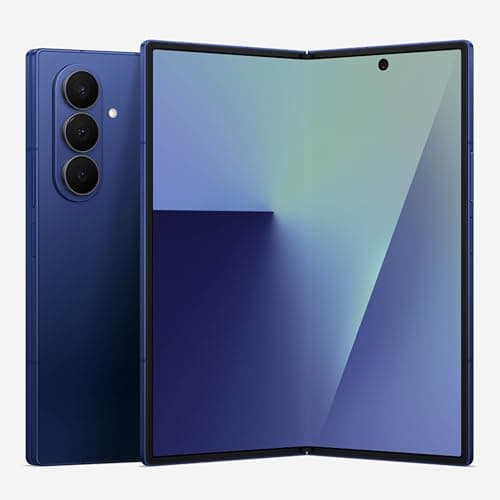
The most immediately striking thing about the Galaxy Z Fold 7 is just how much Samsung has slimmed down the design compared to previous generations. The Fold 6 was already a significant improvement over earlier models, but the Fold 7 takes things to another level entirely. At just 12.1mm thick when folded and weighing 239 grams, it is noticeably more pocketable and comfortable to hold than any previous Galaxy Fold, finally approaching the dimensions of a standard slab phone.
The weight reduction from 253 grams on the Fold 6 to 239 grams on the Fold 7 might not seem dramatic on paper, but in daily use it makes a substantial difference. The device no longer feels like a heavy, bulky experiment that you tolerate for the sake of having a folding screen. Instead, it approaches the weight and feel of a standard slab phone like the Galaxy S25 Ultra, which is precisely the point Samsung is trying to make with this generation of foldable devices.
The hinge mechanism has been redesigned for the Fold 7, offering smoother operation that feels more refined and precise. The new hinge reduces the gap when folded, making the device more pocket-friendly and reducing the amount of dust and lint that can accumulate inside the hinge area. The improved sealing provides an IP48 water resistance rating, meaning it can withstand immersion in fresh water for up to 30 minutes at a depth of 1.5 meters. While this is not the full IP68 rating found on the Galaxy S25 Ultra, it is a significant improvement over earlier foldables and sufficient for protection against rain, accidental splashes, and brief submersion.
The Armor Aluminum frame has been reinforced for better drop protection, and the device features Gorilla Glass Victus 3 on both the front panel and the back panel. The overall build quality is exceptional, with tight tolerances that eliminate the creaking and flex that plagued earlier foldable devices. Every surface and joint communicates quality, matching the premium feel you would expect from a device at this price point.
The foldable display has also been improved with a new ultra-thin glass formulation that reduces the crease visibility by approximately 30 percent compared to the Fold 6. While the crease is still present, it has become far less noticeable in daily use, both visually and tactilely. The improved durability of the ultra-thin glass should also reduce the risk of damage from normal use and screen protector replacement.
The device is available in several attractive colors including Icy Blue, Phantom Black, Shadow Gray, and Mint Green. The finish is matte on all colors, which helps resist fingerprints and gives the device a sophisticated, understated appearance. The camera bump on the back is inevitably more prominent than previous generations due to the larger sensors, but it is well-integrated into the overall design and does not significantly impact the device's ability to lie flat on a desk.
Displays: Dual AMOLED Excellence
The Galaxy Z Fold 7 features two outstanding displays that serve different purposes equally well, making the device feel like two products in one. The cover display measures 6.3 inches, up slightly from the Fold 6, with a 22:9 aspect ratio that makes it feel much more like a traditional phone than the narrow, almost remote-control-like cover screens of earlier Fold models. The 120Hz dynamic AMOLED panel reaches an impressive 2,600 nits peak brightness and provides excellent outdoor visibility even in direct sunlight.
The cover display is genuinely usable as a primary phone screen for most tasks. Typing on it is comfortable, one-handed operation is feasible for users with average-sized hands, and the display quality matches what you would expect from a flagship smartphone. This is a significant improvement over earlier Fold models where the cover screen felt like a compromise you endured until you could open the device.
The main display opens to a gorgeous 8-inch 120Hz AMOLED panel with the same 2,600 nits peak brightness. The screen real estate is genuinely transformative for productivity, media consumption, and gaming. Reading documents with full A4-like proportions, browsing websites with desktop-level layouts rather than mobile approximations, and watching widescreen content are all genuinely improved experiences compared to any traditional smartphone.
Color accuracy on both displays is excellent, with support for the DCI-P3 color space and multiple color profiles to suit different preferences. The Vivid mode delivers punchy, saturated colors that look great for media consumption, while the Natural mode provides more accurate color reproduction suitable for photo editing and color-critical work.
The under-display camera on the main screen has been improved with a higher density pixel array that makes it significantly less noticeable during normal use. In most lighting conditions and against most backgrounds, it is nearly invisible. When it does become apparent against certain backgrounds, it is still far less intrusive than a notch or punch-hole cutout, and most users will forget it is there after a few days of use.
Performance: Snapdragon 8 Elite Power
The Galaxy Z Fold 7 is powered by the Snapdragon 8 Elite for Galaxy, Qualcomm's latest and most powerful mobile chipset. This is the same custom-tuned version found in the Galaxy S25 Ultra, and it represents the pinnacle of mobile processing power in 2026. Paired with 12GB of RAM and your choice of 256GB, 512GB, or 1TB of storage, the performance is nothing short of exceptional across every workload we tested.
In synthetic benchmarks, the Fold 7 achieves the highest scores we have seen on any Android device, edging out even the Galaxy S25 Ultra in multi-core performance thanks to improved thermal management in the larger foldable chassis. The improved thermal dissipation allows the chip to maintain peak performance for longer periods without throttling, which is particularly important for gaming and sustained productivity tasks.
Real-world performance is silky smooth across every task. Multitasking with three apps open in split-screen plus a floating window plus DeX mode mirroring to an external display presented no challenge whatsoever to the Fold 7. App switching is instantaneous, and heavy applications like Adobe Lightroom, LumaFusion, and Asphalt 9 load in the blink of an eye.
Gaming on the Fold 7 is a particular highlight of the experience. The 8-inch main display provides an immersive gaming experience that no traditional phone can match, with the expansive screen revealing details and environmental elements that are simply invisible on smaller displays. Games like Genshin Impact, Call of Duty Mobile, and Diablo Immortal run at maximum graphical settings with smooth, consistent frame rates. The improved thermal dissipation keeps the device comfortably warm even during extended gaming sessions of an hour or more.
The 5G connectivity is excellent, with the Snapdragon X80 modem providing fast and reliable connections on both sub-6GHz and mmWave networks. We tested the Fold 7 on T-Mobile's 5G network and consistently achieved speeds over 400 Mbps in well-covered areas. Wi-Fi 7 support ensures future-proof wireless connectivity for high-bandwidth applications like cloud gaming and 8K video streaming.
Camera System: Finally a Flagship Camera
The Galaxy Z Fold 7 finally delivers a camera system that can genuinely compete with Samsung's other flagship devices rather than feeling like a compromise made for the foldable form factor. The primary camera uses a 200MP sensor, the same ISOCELL HP3 found in the Galaxy S25 Ultra, which represents a massive upgrade over the 50MP sensor in the Fold 6 and addresses the primary photographic weakness of earlier Fold models.
In good lighting conditions, the 200MP camera captures stunning detail with excellent dynamic range and natural color reproduction that closely matches Samsung's proven image processing pipeline. Samsung's pixel-binning technology combines 16 pixels into one for 12.5MP output images that are rich in detail and well-exposed with minimal noise. The 200MP full-resolution mode is available for situations where maximum detail is required, such as landscape photography where you plan to crop heavily or document capture where text legibility is paramount.
Low-light performance is significantly improved over previous Fold models. The larger sensor captures more light, and improved image processing algorithms utilizing the Snapdragon 8 Elite's ISP allow the Fold 7 to capture usable images in very dim conditions with reduced noise and good detail retention. Night mode is effective and reasonably fast, producing well-exposed images with natural-looking colors rather than the oversaturated, artificial look that some competitors produce.
The 3x optical telephoto lens provides useful reach for portraits and distant subjects, producing images with good detail and natural depth of field. The 10x digital zoom leverages the high-resolution main sensor to produce surprisingly usable results for a foldable device, though it cannot match the dedicated periscope zoom lenses found on the Galaxy S25 Ultra. The ultra-wide camera delivers solid results with good distortion correction, though it is essentially unchanged from the Fold 6.
The 10MP cover camera and 4MP under-display camera are adequate for video calls but do not match the quality of the primary camera system. The under-display camera in particular still produces soft, somewhat hazy images in all but ideal lighting conditions, which serves as a reminder of the technical compromises still inherent in the under-display camera technology.
Battery Life and Charging: The Weakest Link
The Galaxy Z Fold 7 packs a 4,400mAh battery, which is a modest 100mAh increase over the Fold 6's 4,300mAh cell. Battery life is acceptable but not class-leading, and this remains one of the areas where Samsung needs to make more aggressive improvements in future generations.
With moderate use including web browsing, social media, messaging, email, and some video streaming, the Fold 7 comfortably lasts a full day with approximately 15 to 20 percent remaining at bedtime. Heavy use involving gaming, extended camera use, or navigation will require a top-up before the end of the day, particularly if you are using the large main display for extended periods.
The 25W charging speed continues to be a significant weakness of Samsung's foldable lineup. While the battery capacity is adequate for a full day of moderate use, the charging speed is embarrassingly slow for a device at this price point. A full charge from empty takes approximately 75 minutes, while competing devices from OnePlus, Xiaomi, and Oppo can fully charge their larger batteries in under 30 minutes. This is the single biggest complaint we have about an otherwise excellent device.
Wireless charging at 15W and reverse wireless charging at 4.5W are present and work as expected. The reverse wireless charging is particularly useful for topping up Galaxy Buds or a Galaxy Watch while traveling without needing to carry additional cables and chargers.
Software and Galaxy AI
The Galaxy Z Fold 7 runs One UI 7.5 based on Android 16, and Samsung has continued to refine the software experience specifically for the large foldable display. The taskbar has been improved with support for more recent apps and the ability to drag and drop apps directly into split-screen view, making multitasking more intuitive and fluid.
Multitasking on the Fold 7 remains the best implementation we have seen on any foldable device. The ability to run up to three apps simultaneously in split-screen plus multiple floating windows makes the device genuinely useful for productivity in ways that no traditional smartphone can match. We regularly used the Fold 7 for tasks like referencing a PDF document while taking notes, monitoring social media while watching a video, or comparing prices across multiple shopping apps simultaneously.
Galaxy AI integration has been expanded with new features specifically designed for the foldable form factor. AI-powered text summarization can analyze documents displayed on the large screen and provide concise summaries. AI photo editing tools allow for intuitive object removal and background adjustments that work particularly well on the expansive main display where you can see the full image while making precise edits.
DeX mode on the Fold 7 works exceptionally well when connected to an external display, providing a desktop-like experience that rivals many traditional computers for basic productivity tasks. The ability to use the Fold 7's main display as a trackpad while connected to an external monitor is a clever implementation that makes the desktop experience more natural.
Audio, Haptics, and Audio Quality
The Galaxy Z Fold 7 features stereo speakers tuned by AKG, delivering rich and balanced audio that is impressive for a device of this form factor. The speakers get plenty loud without significant distortion, and the spatial audio processing creates a convincing soundstage for media consumption. While the audio quality does not match dedicated Bluetooth speakers, it is more than adequate for watching videos, taking calls on speakerphone, and casual music listening.
The haptic motor has been improved for the Fold 7, providing more precise and nuanced feedback. The vibration motor is capable of conveying different types of notifications with distinct patterns, and the haptic feedback when typing is satisfying without being intrusive. For a device at this price point, the haptic experience is exactly what we expect.
Call quality is excellent, with the earpiece providing clear audio and the microphone array effectively filtering out background noise. The improved audio processing algorithms ensure that your voice comes through clearly even in noisy environments, which is essential for a device marketed toward professionals.
Pricing and Value Proposition
The Galaxy Z Fold 7 starts at $1,899 for the 256GB model, rising to $2,019 for the 512GB model and $2,259 for the 1TB model. These are undeniably high prices that place the Fold 7 firmly in ultra-premium territory alongside the iPhone 17 Pro Max and the Galaxy S25 Ultra. The question is whether the foldable experience justifies the premium over these already excellent devices.
For users who frequently multitask, consume media on the go, or need a larger screen for document review and creative work, the Fold 7 offers genuine value that no traditional smartphone can match. The ability to switch between a pocketable phone and a tablet-sized screen is transformative for productivity, and the improved camera system means you are no longer sacrificing image quality for the foldable form factor.
However, for users who primarily use their phone for calls, messaging, social media, and occasional photos, the Fold 7 is overkill. The Galaxy S25 Ultra or even the Galaxy S25 Plus will provide a better camera experience and faster charging at a significantly lower price point. The Fold 7 is a specialized tool for a specific type of user, and it excels in that role.
Competition and Market Position
The foldable market has become significantly more competitive in 2026 compared to earlier years when Samsung had the category largely to itself. Google's Pixel Fold 2 offers a compelling software experience with excellent computational photography at a slightly lower price point. OnePlus Open 2 provides faster charging and a lighter build that some users may prefer. Honor Magic V4 pushes the boundaries of thinness with an even more svelte profile that challenges Samsung's design leadership.
However, the Galaxy Z Fold 7 distinguishes itself through Samsung's refined software experience that has been optimized over seven generations, the best multitasking implementation in the foldable space, the most durable and rigorously tested hinge mechanism, and the comprehensive Galaxy AI feature set that adds genuine value beyond simple gimmicks. Samsung's commitment to seven years of software updates also provides peace of mind that most competitors cannot match, making the Fold 7 a better long-term investment despite its higher upfront cost. For buyers who want the most polished, well-rounded foldable experience available today, the Fold 7 remains the benchmark against which all other foldables are measured.
The Verdict
The Galaxy Z Fold 7 is the best foldable phone Samsung has ever made, and for the first time, it feels like a device that could genuinely replace both a phone and a tablet for many users. The thinner and lighter design addresses the primary complaint about previous Fold models, and the camera upgrade finally brings the photography experience in line with Samsung's other flagship devices.
However, the slow 25W charging speed, mediocre battery life with heavy use, and the astronomical price tag of $1,900 prevent the Fold 7 from being a universal recommendation. If Samsung can address the charging speed and improve battery capacity in future generations, the Fold series will be truly unstoppable and could become the default choice for anyone seeking the ultimate smartphone experience.
For anyone who has been waiting for a foldable that feels like a finished product rather than an ongoing experiment, the Galaxy Z Fold 7 is that device. It is expensive, but it genuinely delivers a unique and valuable experience that no traditional smartphone can match, and for the right user, the premium is entirely justified.
Pros
- Radically thinner and lighter than any previous foldable
- 200MP main camera delivers flagship-quality photos
- Beautiful 8-inch 120Hz AMOLED display
- Excellent multitasking and Galaxy AI integration
- Snapdragon 8 Elite offers class-leading performance
Cons
- 25W charging is embarrassingly slow for a $2,000 phone
- No S Pen support due to removed digitizer
- Mediocre battery life with heavy use on main display
- Telephoto limited to 3x optical zoom
Final Verdict
The Samsung Galaxy Z Fold 7 is thinner than the S25 Ultra, lighter than the iPhone 16 Pro Max, and finally delivers a folding phone that doesn't feel like a compromise. With a 200MP camera, 8-inch display, and Snapdragon 8 Elite power, this is the foldable to buy in 2026.