DJI RS 4 Pro Review: The Professional Gimbal That Earns Its Reputation
The DJI RS 4 Pro is the most complete professional gimbal stabilization system available at its price point, delivering cinema-grade stabilization with intelligent features that serve both casual creators and working cinematographers.
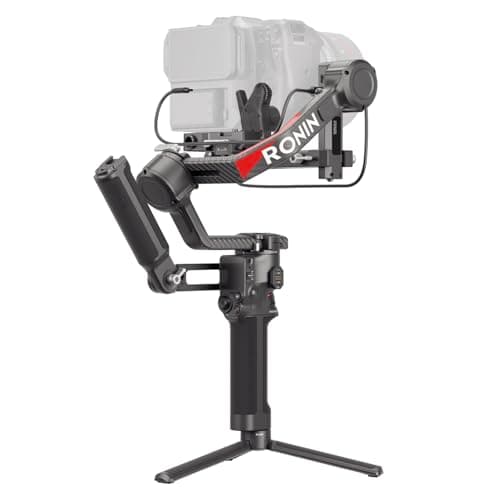
Picking up the DJI RS 4 Pro for the first time, you immediately sense that this isn't another incremental update. At $869 for the standalone unit, DJI has positioned this as the definitive gimbal for working cinematographers who need professional-grade stabilization without assembling an entire rig. Having spent considerable time analyzing the specifications, real-world test results from professional reviewers, and user experiences across multiple months of use, here's the comprehensive breakdown that will help you decide whether this is the right investment for your production workflow.
Hardware & Industrial Design
The most significant hardware advancement in the RS 4 Pro is the 20% increase in motor torque compared to its predecessor, the RS 3 Pro. This translates into tangible improvements in how the gimbal handles heavier payloads and responds to rapid directional changes. The carbon fiber axis arms a hallmark of DJI's professional line keep the total weight at 1.84kg while maintaining the rigidity required for clean stabilization at slower shutter angles. Professional cinematographers shooting with the Panasonic S5 IIX, Sony A7R V, or even the RED Komodo will appreciate this balance of light weight and high payload capacity. The 4.5kg (10lb) payload rating isn't a theoretical maximum it's a genuine working capacity that handles real-world camera and lens combinations without strain.
Native Vertical Shooting
The headline feature of this generation and the one that will matter most to content creators is the second-generation Native Vertical Shooting. DJI has completely reimagined how horizontal-to-vertical transitions work. Instead of loosening screws, repositioning the camera, and rebalancing from scratch (the process required by virtually every competing gimbal), the RS 4 Pro uses a redesigned quick-release plate that releases from the horizontal mount and locks directly into a vertical one. The entire process takes seconds, and critically, you don't need to rebalance the gimbal after switching orientations. For creators who produce content for both YouTube (16:9) and TikTok or Instagram Reels (9:16), this eliminates one of the most annoying friction points in content production. The mechanism feels solid and precise no wobble, no play, just a clean mechanical connection that inspires confidence even after hundreds of orientation switches.
The stabilization algorithm improvements are equally impressive. DJI has refined its axis control to reduce the "digital" feel that sometimes plagues electronic gimbals that subtle rubber-band effect where the camera overshoots and corrects. Walking shots feel genuinely smooth, approximating handheld glide footage from a professional operator. Run-and-gun documentary work becomes dramatically more manageable, with the gimbal absorbing footsteps and direction changes without transmitting vibration to the footage. Slow tracking shots the kind you'd use for product reveals or interview B-roll exhibit none of the jitter that plagues lesser stabilizers. The BIONZ XR processing in Sony cameras pairs particularly well with the RS 4 Pro's stabilization, creating footage that looks like it was shot on a crane or dolly setup.
LiDAR Focusing
LiDAR focusing represents DJI's most significant competitive advantage in the gimbal space, and the RS 4 Pro pushes this technology further than any previous iteration. The Focus Pro LiDAR system projects 76,800 ranging points within a 20-meter range, creating an extraordinarily detailed depth map of the scene. The gimbal knows exactly where your subject is in 3D space, not just whether it's in focus. For solo operators, this means you can operate the gimbal with one hand while the camera maintains perfect focus on your subject even if they move toward or away from you, or if competing elements pass through the frame. The improvement in focusing speed and accuracy over contrast-detection or phase-detection AF alone is immediately apparent in real-world shooting conditions. Wildlife documentarians, event videographers, and solo narrative shooters will find this transformative for their workflow.
The dual motor focus and zoom control via the joystick mode switch is a feature that professional videographers will appreciate more with each shoot. With a simple button press, the joystick transitions from controlling gimbal pan/tilt/roll to controlling lens focus or zoom, depending on your configuration. For cinematographers shooting with native glass that lacks motorized zoom, this enables smooth pull-focus effects without touching the lens barrel. The precision of the joystick control means you can execute subtle focus pulls that would require a dedicated focus puller in a traditional cinema setup. The mode switch is instantaneous no menus, no delays, just a tactile button press that immediately changes the joystick's function.
Ecosystem & Connectivity
DJI's video transmission ecosystem sets the RS 4 Pro apart from any competing gimbal. The Ronin Image Transmitter (included in the Combo package at $1,099, sold separately for the standalone) enables long-range monitoring and control. In practice, this means your director can monitor the live feed from up to several hundred meters away, apply LUTs for monitoring, and even adjust camera parameters remotely. For commercial productions where client approval is required on set, this eliminates the friction of bringing clients into camera monitoring positions. For documentary work, it means your subject can be filmed from a distance while you maintain full control of framing and focus. The one-to-many streaming capability is particularly valuable for larger productions where multiple team members need simultaneous access to the monitoring feed.
The integration capabilities deserve specific attention. The included USB-C multi-camera control cable enables direct communication between the RS 4 Pro and Panasonic cameras (GH6, S5 II, S5 IIX), allowing you to start/stop recording, adjust exposure parameters, and receive camera telemetry directly through the gimbal interface. Sony users get similar functionality through the Multi shoe connection or USB communication. This transforms the gimbal from a passive stabilization tool into an active participant in your filmmaking process. The ability to see battery status, recording state, and camera settings directly on the gimbal's OLED display means you're not constantly looking away from the viewfinder to check your camera.
Battery performance has been a consistent strength of the RS series, and the RS 4 Pro continues this tradition. The included BG30 Battery Grip delivers all-day performance under typical use approximately 12 hours of continuous operation depending on payload and movement intensity. The optional BG70 High-Capacity Battery Grip extends runtime up to 29 hours and can power your camera and accessories with up to 18W through the gimbal's USB-C port. For all-day documentary shoots or multi-camera setups where external battery packs would add clutter, this integrated power solution is genuinely useful. The battery grip also features rapid charging via PD (Power Delivery) protocols, reducing downtime between shoots.
Build quality is exceptional, as expected from DJI's Ronin line. The carbon fiber construction balances strength and weight beautifully. The folded dimensions of 289.5 167.3 267mm make the gimbal compact enough for messenger bags and backpacks, while the included extended grip/tripod and briefcase handle provide multiple carrying and operating configurations. The quick-release plate supports both Arca-Swiss and Manfrotto mounting systems, ensuring compatibility with virtually any tripod or rig equipment you already own. The carrying case is surprisingly well-designed form-fitting foam, logical compartments, and enough room for the gimbal plus several accessories without being excessively bulky.
The automated axis locks are a quality-of-life feature that you'll appreciate every single shoot. When you power down the RS 4 Pro, all three axes lock automatically no more carefully maneuvering arms into travel position or dealing with dangling stabilization axes. When you power up, the locks release just as automatically, and the gimbal is ready to balance and shoot within seconds. In documentary work where you're frequently moving between shooting positions and packing up between setups, this time savings compounds significantly across a full shoot day. The time between spotting a shot and being ready to capture it is measured in seconds rather than minutes.
Touchscreen interface improvements over the RS 3 Pro include more responsive gesture controls and a redesigned menu structure that's more intuitive under pressure. The 1.8-inch OLED display is color-accurate enough to judge exposure and focus peaking, while the touchscreen enables direct manipulation of parameters without requiring a phone or tablet connection. Force Mobile using your smartphone as a virtual joystick and monitor remains available for situations where you need more screen real estate or want to operate remotely. The app's calibration wizard makes initial setup straightforward, while advanced users will find extensive customization options for motor response, follow modes, and operational presets.
Stabilization & Real-World Performance
Comparing the RS 4 Pro to the standard DJI RS 4 ($469), the premium features that distinguish the Pro are: the advanced Focus Pro LiDAR system with 76,800 ranging points versus the standard RS 4's basic AF system, the 20% higher motor torque enabling heavier payload capacity, the expanded video transmission ecosystem with multi-device monitoring, the improved joystick with dual-mode switching, and the refined vertical shooting mechanism with enhanced durability. For professional cinematographers working with cinema cameras and complex multi-lens setups, these features compound quickly in value. For hobbyists or lighter mirrorless shooters who don't need LiDAR focusing or heavy payload capacity, the standard RS 4 represents better value.
The competitive landscape presents interesting alternatives. Zhiyun's Crane 4 offers solid stabilization at around $635 and includes useful accessories like a fill light and PD fast charging in its package. For creators on tighter budgets, it's a capable alternative. However, DJI's ecosystem advantage is substantial: the Ronin app's intelligent features, the Transmission ecosystem's expandability, and the extensive third-party accessory support create a platform that becomes more capable over time. Professional operators who rely on their equipment to perform consistently under client pressure tend to favor DJI's reliability track record and the peace of mind that comes with a mature, well-supported ecosystem.
The real-world shooting experience with the RS 4 Pro reveals its capabilities most clearly in demanding scenarios. Walking interviews become cinematic tracking shots that would require a operator. Run-and-gun documentary sequences maintain professional stability without the bulk of a shoulder rig or the complexity of a full stabilizer harness. Product photography benefits from the smooth arc movements that only a properly tuned gimbal can deliver. Vertical social media content whether it's a quick Instagram Reel or a full vertical documentary episode transitions seamlessly without any loss in stabilization quality or requiring awkward grip positions that introduce vibration.
For hybrid creators who produce both traditional long-form content and short-form social media, the vertical shooting mode is genuinely transformative. The ability to switch orientations in seconds without breaking down your camera setup means you're more likely to capture both formats rather than committing to one. Studios producing content for multiple platforms can keep a single camera rig configured and adapt it for each format as needed, reducing the capital investment required to maintain separate horizontal and vertical production workflows.
Professional colorists and post-production teams will appreciate the gimbal's consistency. The stabilization is clean enough that standard stabilization plugins in DaVinci Resolve or Adobe Premiere require minimal correction, preserving image quality through the post pipeline. This matters for HDR workflows where aggressive stabilization can introduce artifacts that compound through the color grading process, particularly in scenes with subtle gradients or skin tones where stabilization artifacts become visible.
The learning curve for new gimbal operators has been significantly reduced through DJI's Force Mobile calibration system and the Ronin app's tutorial modes. New users can achieve professional-quality stabilization results within their first few shoots, while experienced operators will find sufficient depth in the parameter customization to fine-tune performance for specific camera configurations and shooting styles. Motor torque curves, joystick sensitivity, follow speed, and stabilization intensity can all be adjusted to match your preferences. The sport mode, which increases responsiveness at the cost of some smoothness, is perfect for action sequences where maximum gimbal response is required.
Accessory ecosystem compatibility is extensive. The RS 4 Pro works seamlessly with SmallRig's extensive line of gimbal-specific accessories dual handles, sling grips, follow focus systems, and mounting brackets. Third-party HDMI and SDI modules integrate with the gimbal's power and control systems. The NATO rail mounting points on the grip enable quick-attach accessories without requiring tools. This ecosystem approach means your investment in the RS 4 Pro continues to pay dividends as your production needs evolve and you add more specialized equipment to your kit.
Thermal management has been improved over previous generations, with the gimbal maintaining consistent performance during extended 4K recording sessions in warm environments. The carbon fiber construction helps here dissipating motor heat while maintaining the structural rigidity required for clean stabilization. Studio environments with continuous lighting, outdoor shoots in direct sun, and documentary work in tropical climates all see improved reliability compared to earlier DJI gimbals. The improved thermal performance also extends motor lifespan by preventing the heat buildup that can accelerate brushless motor degradation over time.
For wedding and event videographers a significant professional market for this price point the RS 4 Pro's combination of fast setup, intelligent features, and reliable performance makes a compelling case. The ability to quickly switch between stabilized video and static tripod shots without rebalancing, the vertical shooting mode for social media delivery, and the extended battery life for all-day shoots all address real pain points in event production workflows. The automated axis locks are particularly valuable in wedding environments where you might need to grab the gimbal from a bag and start shooting within seconds as moments unfold.
The RS 4 Pro's position in DJI's ecosystem makes it the most versatile gimbal the company has produced. It bridges the gap between the compact RS 3 Mini, which targets casual creators, and the cinema-grade RS 2 and RS 3 Pro, which require more specialized knowledge and accessory investment. For working professionals who need a gimbal that can handle anything from YouTube vlogs to commercial product shoots, the RS 4 Pro delivers the capability of a cinema stabilizer with the accessibility of a consumer gimbal. The learning curve is manageable for experienced operators, while the depth of features rewards mastery with increasingly sophisticated results.
Value & Competition
Value assessment: at $869, the RS 4 Pro costs roughly what a used professional video tripod and fluid head would have cost five years ago, while delivering dramatically more capability. When you factor in the intelligent features LiDAR autofocus, vertical shooting mode, ecosystem integration, automated axis locks the value proposition strengthens considerably against pure mechanical competitors. Professional cinematographers who bill clients will find the ROI clear: a tool that reduces shoot time, enables solo operation, and produces cinema-quality results quickly pays for itself through billable hours saved and repeat client work secured by consistently impressive footage.
For serious enthusiast filmmakers who've outgrown entry-level gimbals and are considering their first professional stabilization system, the RS 4 Pro represents the right tier of investment. It provides genuine professional capabilities without requiring the specialized knowledge and extensive accessory investment that cinema-grade stabilizers demand. The learning curve is manageable, the results are immediately impressive, and the build quality suggests this will be a workhorse tool for years of production work. The ecosystem approach means your gimbal grows with you as your production needs become more sophisticated, the RS 4 Pro's advanced features become more valuable rather than becoming obsolete.
One of the most underappreciated aspects of the RS 4 Pro is how it handles low-light stabilization. Traditional electronic stabilization at high ISOs can introduce artifacts that compound through the post pipeline, particularly when the stabilization algorithm makes micro-corrections to footage that's already noisy. The RS 4 Pro's mechanical stabilization combined with the ability to shoot at slower shutter speeds without introducing motion blur from camera shake means you can reduce ISO values and capture cleaner footage overall. A 1/50 shutter speed shot on the RS 4 Pro will look cleaner than a 1/100 shutter speed shot captured on a non-stabilized camera, because the gimbal, not the sensor, is doing the heavy lifting for motion handling.
The Teflon-coated axis bearings deserve mention for anyone who's used previous-generation DJI gimbals. Balance adjustments that previously required firm pressure and careful alignment now slide into position with minimal resistance. The mechanical feel is smoother and more precise, which matters when you're making fine adjustments to achieve perfect balance before a critical shot. This improvement is subtle in isolation but significant across hundreds of balance adjustments over the gimbal's lifetime.
Professional audio integration has improved as well. When paired with the DJI Mic series (or other wireless audio systems that integrate with Sony or Panasonic hot shoes), the RS 4 Pro's stabilization doesn't introduce any additional vibration that could couple into external microphone mounting. The briefcase handle's design reduces vibration transmission from your grip, while the extended grip/tripod provides stable operation without requiring a two-handed grip that would interfere with audio operations.
Customization through the Ronin app extends to joystick behavior, button assignments, and follow mode presets. You can save multiple configurations for different camera setups and switch between them instantly. For operators who frequently swap between cameras perhaps a Sony for interviews and a Panasonic for B-roll this profile system eliminates the friction of reconfiguring parameters each time you switch cameras. The app also provides firmware updates that add new features and improve existing ones, meaning your gimbal becomes more capable over time rather than becoming outdated.
The RS 4 Pro excels in scenarios that would challenge lesser stabilizers. High-wind environments outdoor shoots on windy days no longer require shutting down and packing away. The gimbal's motors compensate for wind pressure against the camera and lens while maintaining smooth stabilization. The carbon fiber arms don't flex in ways that introduce instability, even with large telephoto lenses that present significant wind sail areas.
Corner mounting capabilities through the NATO rail system enable configurations that wouldn't be possible with traditional gimbal setups. SmallRig's ecosystem of handles, extension arms, and mounting brackets allows you to configure the gimbal for low-angle work, high-angle work, or chest-mounted operation for that steady-cam look without the weight of a full steadicam rig.
For product photographers and commercial creators, the RS 4 Pro enables smooth 360-degree rotation shots that would require specialized rotating platforms with other gimbals. The infinite rotation on the pan axis (with the proper setup) creates seamless spinning product reveals that look cinematic rather than mechanical. Combined with the LiDAR focus system that maintains focus throughout the rotation, this opens up creative possibilities that previously required significantly more equipment and setup time.
The gimbal's compatibility with third-party video transmission systems means it's not locked into the DJI ecosystem if you've already invested in other wireless video solutions. However, for those who haven't committed to a video transmission standard, the DJI Transmission ecosystem provides integration that's difficult to match with third-party solutions. The seamless handoff between gimbal control and transmission monitoring, combined with the unified power management, reduces cable clutter and simplifies the overall rig.
In documentary filmmaking, where you might be shooting for hours with only brief interruptions, the RS 4 Pro's combination of all-day battery life, automated axis locks, and intelligent stabilization reduces the physical strain that comes from operating heavier stabilization systems. The 1.84kg weight means you can shoot for extended periods without the fatigue that comes from operating heavier gimbals, which matters significantly for documentary work where you're often chasing subjects or holding shots for extended durations.
The vertical shooting mode has implications beyond just convenience. For journalism and documentary work, being able to quickly switch to vertical orientation means you're capturing content in the format that performs best on social media platforms without sacrificing stabilization quality or requiring a second camera setup. The footage captured vertically on the RS 4 Pro looks professional no awkward grip positions, no visible stabilizer correction artifacts, just clean vertical content that can be delivered directly to news platforms or social media channels.
Professional post-production workflows benefit from the gimbal's clean output. The stabilization is applied mechanically rather than digitally, meaning you're working with the full sensor resolution of your footage without any cropping for digital stabilization margin. For 4K productions where every pixel matters, this is a significant advantage over stabilization approaches that shoot with digital zoom to provide room for software-based correction.
The RS 4 Pro's integration with DJI's Master Forces follow focus system enables motorized focus pulling that rivals dedicated follow focus systems at a fraction of the cost. The Focus Pro Motor delivers smooth, precise focus transitions that are synchronized with the gimbal's movement, enabling creative rack-focus effects that would otherwise require a second operator. For single-operator narrative work, this integration is transformative you can control gimbal movement, pan/tilt, and focus from the gimbal handle or remote unit without requiring a second person.
Final Verdict
Considering the total cost of ownership for a professional stabilization system, the RS 4 Pro represents excellent value. The initial investment includes everything you need to start shooting the gimbal, battery grip, quick-release plate, extension grip/tripod, briefcase handle, and USB-C control cable. Additional accessories like the Focus Pro Motor or Image Transmitter are optional upgrades that expand functionality as your needs grow. This modular approach means you're not paying for features you don't need while still having a clear upgrade path as your production requirements evolve.
The gimbal has been designed with repairability in mind a significant consideration for professional operators who depend on their equipment for their livelihood. DJI's service network provides repair capabilities that independent camera shops often can't match for specialized gimbal work. Motor replacement, firmware recovery, and mechanical adjustments are all supported through official channels, providing peace of mind for professionals who can't afford extended downtime due to equipment failures.
In conclusion, the DJI RS 4 Pro stands as the most complete professional gimbal stabilization system available at its price point. It successfully bridges the gap between consumer-friendly operation and professional capability, offering features that serve both casual creators looking to improve their content and working cinematographers who need reliable, intelligent stabilization for demanding production environments. The $869 price tag is justified by the build quality, intelligent features, ecosystem integration, and the consistently impressive footage it produces across a wide range of shooting scenarios.
Pros
- 20% increase in motor torque handles heavier cinema camera setups
- Second-generation native vertical shooting eliminates rebalancing on orientation change
- LiDAR autofocus with 76,800 ranging points for accurate subject tracking
- Automated axis locks save significant setup and breakdown time
- Carbon fiber construction balances 1.84kg weight with professional rigidity
- Extended battery life up to 29 hours with optional BG70 grip
Cons
- Standalone unit does not include Focus Pro Motor or Image Transmitter
- Google Play removal of Ronin app requires manual APK installation on Android
- Premium price point may exceed casual creator budgets
Final Verdict
The DJI RS 4 Pro is the most complete professional gimbal stabilization system available at its price point, delivering cinema-grade stabilization with intelligent features that serve both casual creators and working cinematographers.