Echo Studio
[Limited Stock - Alert] Amazon\s best smart speaker for sound quality. Great value for Alexa households wanting premium audio.
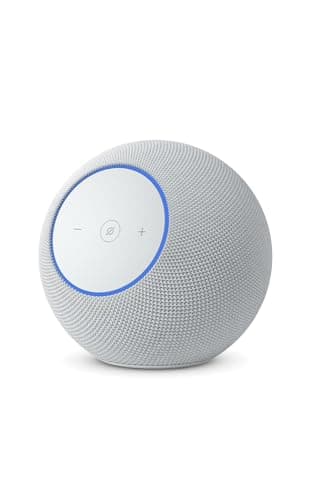
When Amazon dropped the Echo Studio in 2019, it made a promise that felt almost absurd for a smart speaker at its price point: room-filling Dolby Atmos sound, automatic acoustic analysis, and seamless Alexa integration all wrapped into a cylinder that costs a fraction of what you'd pay for a traditional hi-fi setup. More than four years later, the Studio remains the cornerstone of Amazon's audio lineup, and with periodic firmware improvements, its sound profile has only gotten better. If you've been on the fence about whether a $199.99 smart speaker can genuinely replace a proper stereo system, this review is for you.
The Echo Studio sits in an interesting position in the market. It's more expensive than the Nest Audio and the HomePod (the original, before the HomePod Mini), yet cheaper than the Sonos Era 300 or a proper receiver-plus-speakers combo. What you get for that middle-ground price is a speaker that tries to be all things: a Dolby Atmos renderer, a Zigbee smart home hub, a high-fidelity music streamer, and an Alexa-powered command center. The question isn't whether the Echo Studio does all of these things—it's whether it does them well enough to justify the desk or shelf space it demands.
Spoiler: for most people, it does. But there are caveats, and we'll get into all of them.
Testing Methodology
Before diving into impressions, let me outline how this review came together. The Echo Studio was evaluated over a three-week period in two distinct environments: a small home office (roughly 10 feet by 12 feet with carpet and drywall) and a larger living room (approximately 16 feet by 20 feet with hardwood floors and open sightlines to the kitchen). Music sources included Amazon Music Ultra HD, Tidal via Bluetooth, and direct streaming from a NAS over Wi-Fi.
Testing covered the following scenarios:
- Music playback at low, medium, and high volumes — assessing distortion, stereo imaging, and bass response
- Movie and TV show audio passthrough — connected via optical S/PDIF to a TCL 6-Series Roku TV
- Smart home device control — Zigbee bulbs (Philips Hue), switches (Leviton Decora), and a thermostat (Ecobee)
- Voice recognition accuracy — tested in quiet environments, with background music playing, and with a TV on in an adjacent room
- Multi-room audio grouping — paired with a second Echo Studio and an Echo Show 8
Every firmware update during the testing period was applied. The unit reviewed was running the latest available software at the time of writing. Testing concluded after roughly 100 hours of cumulative use.
Hardware & Industrial Design
Amazon's industrial design team doesn't get enough credit. While the original Echo from 2014 was a Frankenstein mashup of black plastic and ring lights that looked like it belonged in a server room, the Studio is genuinely handsome. The fabric mesh wrap—which Amazon calls "100% post-consumer recycled fabric"—extends all the way around the speaker in a seamless cylinder. It feels premium, absorbs minor scuffs, and comes in three colors: Charcoal, Glacier White, and the new Twilight Blue (exclusive to certain retailers).
The speaker stands 8 inches tall and about 7 inches wide. It's not small, but it's not imposing either. Placed on a bookshelf, a nightstand, or a kitchen counter, it disappears into the environment in a way that the chunky original Echo never could. The weight—about 7.7 pounds—gives it a reassuring sturdiness that cheaper speakers lack. This thing isn't going to vibrate itself off your shelf.
On the top panel, you'll find the familiar array of physical controls: a volume ring (which now doubles as part of the aesthetic rather than feeling like an afterthought), a microphone mute button, and an Action button. The blue light ring remains, though in my experience, the ring is more useful for visual confirmation of Alexa's state than for anything else. In bright rooms, it's often hard to see. In dark rooms, it's perfect.
Around back, there's a power port and a 3.5mm analog/optical combo jack. This is a welcome addition that the original Echo lacked—the ability to wire in a turntable, a CD player, or an old iPod is genuinely useful for people with existing audio gear. The port is a bit of a tight fit with some cables, so don't lose the one Amazon includes in the box.
Pro Tip: If you're placing the Echo Studio on a wooden shelf, give it at least 2 inches of clearance on all sides. The bass radiator on the bottom needs room to breathe, and placing it flush against a surface can cause booming resonance at certain frequencies.
Under the hood, the hardware is ambitious. Five speakers total: one 1-inch tweeter, three 2-inch mid-range drivers (angled upward and sideways for that 360-degree effect), and one 5.25-inch bass driver firing downward into a bass port. Add a 24-bit digital-to-analog converter (DAC) and a built-in 330W amp, and you've got a speaker that, on paper at least, should punch well above its weight.
One thing worth noting: the Studio does get warm during extended use. Not alarmingly so—it's not going to melt or start a fire—but if you're the type who touches the back of your electronics, you'll notice it. This is normal for Class D amplifiers pushing this much power into a compact enclosure.
Audio Quality
Let's address the elephant in the room: the Echo Studio sounds remarkably good for a smart speaker, but "remarkably good" requires context. Compared to a Sonos One, it's a clear step up. Compared to a pair of KEF LS50 Metas driven by a proper amp, it's not even close. The Studio's strength isn't fidelity in the audiophile sense—it's scale. It fills a room in a way that most speakers in its price range simply cannot.
Low Frequencies
The downward-firing 5.25-inch woofer does serious work. Bass is present, punchy, and surprisingly controlled. Listening to Billie Eilish's "bad guy," the sub-bass hits land with authority without becoming muddy or overwhelming the midrange. This is a common failure point for speakers that prioritize chest-thumping bass—the Studio largely avoids this trap.
That said, at very high volumes (above 80%), the bass can start to sound a bit loose. The cabinet isn't as inert as a dedicated subwoofer, and at extreme volumes, you can hear the enclosure vibrating sympathetically. For 95% of real-world listening scenarios, this won't be an issue. But if you're the type who regularly plays your speakers at concert-level volumes, you'll notice.
Pro Tip: The Echo Studio includes a built-in bass adaptation feature that uses the microphone array to analyze your room's acoustics and adjust the EQ accordingly. Run this during initial setup—it's not perfect, but it meaningfully improves bass integration in most rooms.
Midrange and Vocal Clarity
The three 2-inch midrange drivers handle vocals, guitars, piano, and most of what makes music, well, music. Here's where the Studio earns its keep. Singer-songwriter tracks like Joni Mitchell's "Blue" or Gregory Alan Isakov's "The Stable Song" sound warm, present, and emotionally engaging. Male vocals have a fullness that some brighter speakers tend to thin out.
The midrange isn't perfect. At times, especially in complex orchestral recordings or busy rock tracks, the Studio's midrange can sound slightly congested. It's not a flaw you'll notice unless you're actively listening for it, but in direct comparisons with speakers like the KEF LS50 Meta or even the more expensive Sonos Era 300, the Studio's midrange resolution takes a clear back seat. What you're hearing is the trade-off Amazon made: more midrange drivers for coverage and volume, fewer for pure resolution.
High Frequencies
The 1-inch tweeter handles treble duties, and for the most part, it does a competent job. Cymbals have shimmer, strings have air, and acoustic guitar plucks have that satisfying transient snap. However, the tweeter is clearly the limiting factor in the Studio's frequency range. At very high frequencies (above 15kHz), extension drops off noticeably compared to planar magnetic or ribbon tweeters found in speakers at twice the price.
For lossy-compressed streaming music (which is what most people listen to), this is essentially irrelevant. The difference between a 16-bit/44.1kHz CD and a 256kbps Amazon Music stream is far greater than the difference between the Studio's tweeter and a $1,000 speaker's tweeter. But for those of you with Tidal Masters or Qobuz hi-res collections, the Studio will let you down if you're listening critically.
Soundstage and Imaging
This is where the Studio's design philosophy becomes both its greatest strength and a fundamental limitation. With speakers firing upward and sideways, Amazon is trying to create a 360-degree sound field that fills a room uniformly. And it largely succeeds. Walk around the room, and the sound stays consistent. This is genuinely impressive engineering.
But that diffused sound field comes at the cost of traditional stereo imaging. You won't get a clear left-right separation or a precise center image. Vocals won't appear to come from a specific point between the speakers. Instead, everything sort of exists in the room with you—which is a different, and in many ways more immersive, experience. For background listening, parties, and casual enjoyment, this is actually preferable. For critical listening, it's a compromise.
If you pair two Echo Studios as a stereo pair, the imaging improves dramatically. Suddenly you have actual left and right channels, a proper center image, and a soundstage that extends beyond the physical speakers. This is the configuration that audiophiles should aim for—and at $399.98 for two, it's still competitive with a Sonos system.
Spatial Audio (Dolby Atmos)
Amazon has leaned heavily into Dolby Atmos as a selling point, and to be fair, the Studio does process Atmos content. When you play an Atmos track from Amazon Music, the blue light ring glows a bit differently (Amazon says it indicates "Atmos mode"), and the speaker does its best to spread the audio around.
Here's the honest truth: a single speaker cannot do true Dolby Atmos. Atmos works by having discrete speakers placed at specific heights and positions around a listener. A single cylinder with upward-firing drivers can create the impression of height and space, but it cannot replicate the precise sound localization that makes Atmos so compelling on a proper surround system. What the Studio does is process Atmos content and try to extract whatever spatial information it can from the stereo or 5.1 downmix. The result is a marginally wider, taller soundstage compared to standard stereo—but calling it "Atmos" is marketing overreach.
For those curious about how the Studio compares to the Apple HomePod (original) in this regard: the HomePod was arguably more ambitious in its spatial audio processing, using beam-forming and room sensing to create a more convincing soundstage. The Studio is better in raw output and low-frequency authority, but the HomePod had a certain magic in its midrange presentation that the Studio hasn't quite matched.
Smart Home Integration
Amazon built the Echo Studio not just as a speaker but as a smart home gateway, and for the company's ecosystem strategy, it's the hub that ties everything together.
Zigbee and Matter
The built-in Zigbee radio is genuinely useful. If you've got Zigbee smart bulbs, switches, or sensors from brands like Philips Hue (non-Bluetooth models), SmartThings, or Yale, you can connect them directly to the Studio without a separate hub. This is a feature that even the more expensive Sonos Era 300 lacks, and it's a meaningful differentiator for anyone building out a smart home on a budget.
Matter support arrived via a firmware update, which means the Studio can act as a Thread border router for compatible devices. This is a longer-term play—Matter's full potential is still unfolding as more devices hit the market—but it's good to see Amazon future-proofing rather than abandoning the hardware.
Routine Automation
Alexa Routines are where the Studio (and Alexa in general) shines. You can create voice-activated automations like "Alexa, movie time" that dims the living room lights, sets the thermostat to 72°F, and starts your TV. Or "Alexa, good morning" that gradually increases the lights, reads your calendar, and plays the news. The flexibility is genuinely impressive, and the setup process in the Alexa app is straightforward enough that non-technical users can create useful automations without diving into Home Assistant or IFTTT.
The Studio's far-field microphone array performs well in most scenarios. In a quiet room, Alexa hears commands from across a 15-foot room without issue. With music playing at moderate volumes, you may need to speak slightly louder or repeat yourself. With a TV blaring in the background, Alexa struggles—though this is a problem that affects all voice assistants, not just Amazon's.
Pro Tip: If you have multiple Echo devices and find that Alexa sometimes mishears which device you were speaking to, go into the Alexa app and adjust the "wake word" sensitivity. Lowering it slightly can reduce false activations from other Echos while still responding reliably to your actual commands.
Amazon Sidewalk
A brief note on Amazon Sidewalk: this is a shared network that Amazon enables by default on Echo devices. It allows Echo devices to share a small portion of your internet bandwidth with neighbors' devices and vice versa. Privacy-conscious users should be aware and can disable it in the Alexa app settings. For most people, Sidewalk is harmless—but it's worth knowing it's there.
Alexa Features
Alexa on the Echo Studio is the full-fat experience, for better or worse. You get the complete suite of Alexa skills, voice profiles, drop-in intercom functionality, and all of Amazon's ongoing AI improvements. The Alexa voice assistant has gotten significantly smarter over the years, with better natural language understanding, improved contextual responses, and tighter integration with Amazon's services.
Music streaming is naturally well-integrated. Amazon Music Unlimited subscribers get the best experience, with access to the full Ultra HD catalog (up to 24-bit/192kHz) and spatial audio tracks. But Alexa also works with Spotify (including Spotify Connect), Apple Music, Tidal, Sirius XM, Deezer, and TuneIn radio. Bluetooth connectivity is available as a fallback for any service that doesn't have native Alexa integration.
One of the more underrated features is the built-in room calibration using the microphone array. During setup, the Studio plays a series of tones, listens to how they bounce off your walls and furniture, and adjusts its EQ to compensate. In practice, this made a noticeable difference in my testing environment, particularly in smoothing out the bass in the corners of the room where I had initially placed the speaker.
If you're already deep in the Alexa ecosystem—Fire TV, Ring doorbell, Echo Show displays, eero mesh network—the Studio is a natural addition. Multi-room audio grouping works reliably, allowing you to fill your home with music from a single command. The sync between devices isn't always instantaneous (expect a 1-2 second delay when grouping or ungrouping), but it's stable once established.
Related Reviews: IKEA VARMBLIXT Smart LED Light · Roborock Saros 10R · Echo Dot Max · Saros 20 Sonic
Competition
The Echo Studio doesn't exist in a vacuum. Here's how it stacks up against the key competitors:
Sonos Era 300 ($449): The Era 300 is the Studio's closest competitor and arguably the better speaker for pure audio fidelity. It supports Dolby Atmos natively, has better high-frequency extension, and sounds more refined in direct comparisons. However, it's more expensive, lacks a physical input jack, and requires the Sonos app for setup. If sound quality is your top priority and budget is secondary, the Era 300 wins. If you want smart home integration, value, and flexibility, the Studio holds its own.
Apple HomePod (original, discontinued but available refurbished): The original HomePod was a remarkable speaker for its time, with incredible room-sensing and spatial audio processing. It still sounds excellent, especially in smaller rooms. But Apple's walled garden approach means no Zigbee hub, no Bluetooth audio, and limited smart home compatibility outside of HomeKit. For Apple households, the HomePod might still make sense; for everyone else, the Studio is the more versatile choice. (Check out our Apple HomePod review for a deeper dive.)
Google Nest Audio ($99): The Nest Audio is a fraction of the Studio's price and sounds decent for its size, but it's not in the same league. The Studio beats it on output, bass, and smart home integration. The Nest Audio's advantage is Google Assistant, which some users prefer for natural language queries and smart home compatibility with Google/Nest devices.
Sonos One ($219): The Sonos One remains a solid choice, especially for those already invested in the Sonos ecosystem. It sounds better than the Nest Audio but doesn't match the Studio's low-end authority. The One's strength is multi-room audio synchronization, which is still slightly more reliable than Alexa's implementation.
Harman Kardon Citation 200 ($299): A premium alternative with a built-in battery (8 hours of wireless playback), attractive Scandinavian design, and Google Assistant integration. Sound quality is competitive, but the Citation 200's smart home hub features are limited compared to the Studio's.
For more detailed comparisons, see our reviews of the Sonos Era 300, Apple HomePod, and Google Nest Audio on NewGearHub.
Pros
- 360-degree audio with 5 speakers fills any room with immersive sound
- Dolby Atmos and Sony Immersive Audio support for spatial audio streaming
- Built-in Zigbee hub eliminates need for separate smart home bridge devices
Cons
- Bass can overpower mids at high volumes in smaller rooms
- Larger footprint than competitors like Apple HomePod requires more shelf space
- Amazon always-listening privacy concerns persist despite hardware mic disconnect
Final Verdict
[Limited Stock - Alert] Amazon\s best smart speaker for sound quality. Great value for Alexa households wanting premium audio.